
The Architecture of Social Conscience: How Jackson Browne Restructured the Modern Protest Song to Defend America’s Vulnerable Youth
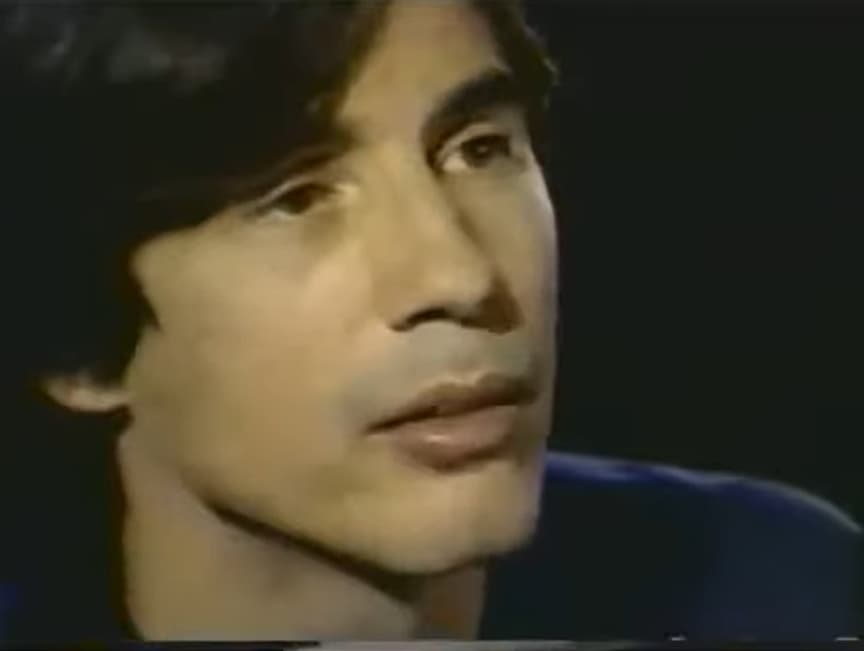
True artistic bravery requires an individual to actively push past the comfortable boundaries of self-reflection to confront the larger, often terrifying forces shaping human society. In a profoundly significant 1989 archival mini-biography and interview, television audiences were gifted a remarkably clear, articulate look into the evolutionary journey of Jackson Browne. Released during the promotional cycle for his ninth studio masterpiece, World in Motion, this captivating televised portrait traces his artistic trajectory from a nineteen seventies acoustic folk confessionalist into a fiercely principled, left-wing commentator of the late nineteen eighties. Standing today as an invaluable historical holy grail for music preservationists worldwide, the vintage broadcast beautifully illustrates how a world-class musician successfully transformed the traditional protest song into a sophisticated mirror for global economic and social justice.
To absorb this specific 1989 conversation in its uncut clarity is an intensely moving experience that triggers an immediate wave of pure warmth and bittersweet nostalgia. At forty years old, Browne possessed a remarkably handsome, youthful presence that caused many contemporary viewers to marvel that he looked far more like a twenty-six year old just starting out than a seasoned veteran of ten major American tours. Reflecting on his childhood as part of the first genuine rock and roll generation, he notes how his peers grew up in a golden era of post-war materialism where America was on top of the world. However, the subsequent trauma of the civil rights movement and the tragic assassination of three charismatic leaders permanently shattered that illusion, instilling in him a deep, lifelong responsibility to use his art to change the world for the better.
The true intellectual value of this resurrected archive lies in its honest, uncompromising look at Browne’s creative philosophy regarding social policy. Sitting inside his Los Angeles home, the legendary songwriter explains his conscious decision to abandon an exclusively narrative style, choosing instead to weave complex global issues, like the hidden conflicts in South Africa or Chile, straight into his personal love songs. Rejecting the shallow, escape-driven entertainment model prioritized by commercial charts, Browne passionately argues that a true artist must challenge the public to look inside themselves and examine their own feelings. This profound social conscience directly aligns with his modern identity as a staunch economic progressive and Bernie Sanders supporter, viewing the preservation of human dignity as his ultimate spiritual religion.
Nowhere is this brilliant progressive worldview more visible than in the interview’s final, heavy segment regarding the global drug crisis. Seeking to set the record straight after his traditional cover of “Cocaine” was misunderstood as a shallow party anthem, Browne delivered a blistering, updated commentary that remains stunningly prophetic. He fearlessly calls out the hypocrisy of government leaders who preached simplistic slogans while cutting essential public funds. With immense empathy, Browne reminds the world that inner-city teenagers do not turn to substances out of a simple lack of willpower, but because a predatory system has stripped them of functional families, food on the table, quality education, and real opportunity in this life. Ultimately, this magnificent 1989 broadcast remains an indispensable triumph, ensuring that the elegant, urgent philosophy of Jackson Browne will continue to provide deep historical inspiration for generations to come.