
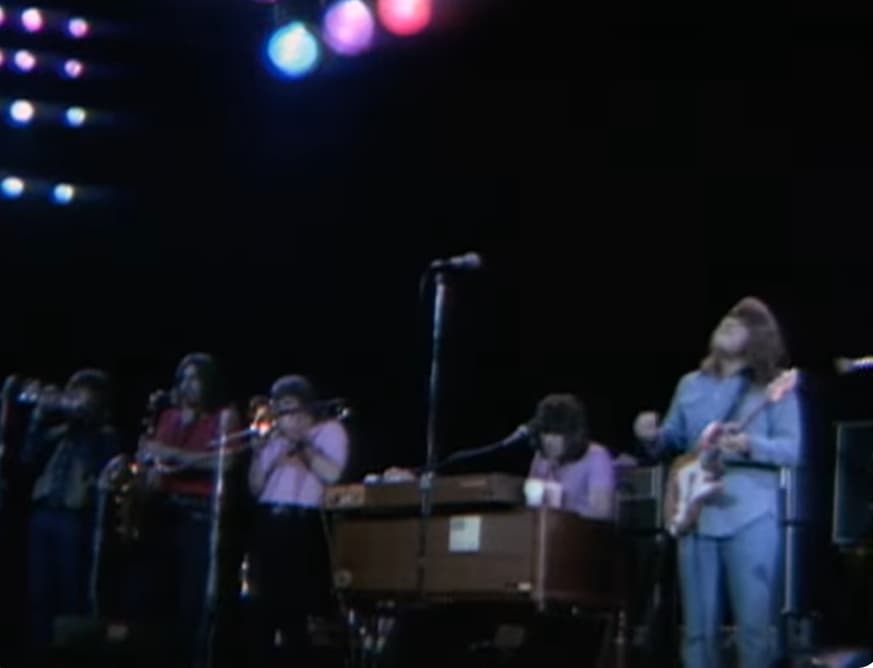
A Song for the Times: Chicago’s “Poem for the People” Turns Tanglewood into a Stage of Conscience
A summer evening in 1970 at Tanglewood became an unlikely meeting point between tradition and transformation as Chicago delivered a striking performance of “Poem for the People.” Known primarily as a sanctuary for classical music, Tanglewood provided a setting that amplified the significance of this moment. Chicago did not simply perform. They introduced a new language of rock that carried both musical ambition and social reflection.
“Poem for the People” stands as one of the band’s most purposeful compositions from their early period. Emerging in the shadow of the Vietnam War and a rapidly shifting cultural landscape, the song channels a desire for unity and understanding. Rather than relying on conventional song structure, it unfolds gradually, building its message through layers of instrumentation and collective expression. This approach transforms the piece into something closer to a musical statement than a traditional performance.
The arrangement highlights Chicago’s defining characteristic, their powerful horn section. Trumpet, trombone, and saxophone do more than embellish the sound. They shape it. The horns rise and fall alongside the vocals, creating a sense of dialogue that reinforces the song’s central themes. At the same time, the presence of Terry Kath adds emotional weight. His guitar work is measured and deliberate, choosing nuance over dominance, allowing each note to resonate within the broader ensemble.
What distinguishes this performance is its sense of restraint. There is no immediate rush toward a dramatic peak. Instead, the band carefully constructs momentum, inviting the audience into a shared experience. This method reflects a deeper confidence. Chicago trusts both their material and their listeners, an approach that feels particularly powerful within a venue traditionally associated with attentive and reflective audiences.
Viewed in retrospect, the Tanglewood concert captures Chicago at a formative stage. Before their later commercial success and radio friendly ballads, they operated as a bold and exploratory group, unafraid to challenge expectations. “Poem for the People” embodies that spirit. It is ambitious in structure, rich in texture, and grounded in purpose.
The connection between song and setting elevates the performance further. A composition centered on humanity and collective identity finds its voice in a place dedicated to the appreciation of music as an art form. This alignment transforms the concert into more than entertainment. It becomes a moment of cultural dialogue.
For contemporary viewers, the recording offers a rare glimpse into a time when rock music sought to engage with the world around it in meaningful ways. It reminds us that beyond the charts and commercial milestones, there existed a desire to speak, to question, and to connect. In that sense, Chicago’s performance at Tanglewood remains not only historically important, but deeply relevant.