
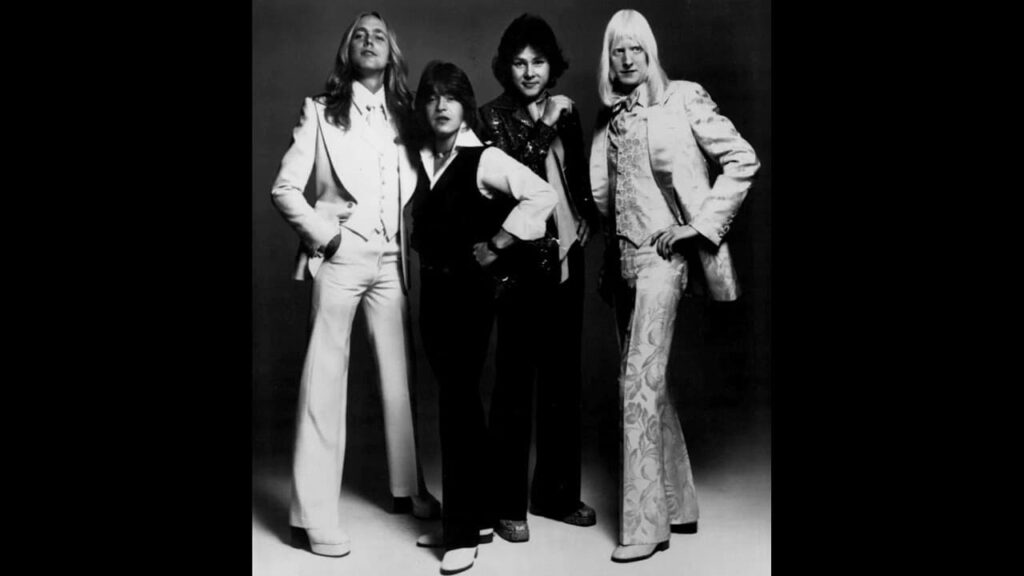
A Machine Built from Sound and Imagination.
In 1973, a performance of “Frankenstein” by The Edgar Winter Group captured a rare moment when instrumental rock stood at the forefront of popular music. At a time dominated by vocal driven hits, this composition challenged expectations, proving that structure, rhythm, and tone alone could command an audience’s full attention.
The origins of the piece add a layer of intrigue that continues to fascinate listeners. Named after the literary figure assembled from disparate parts, “Frankenstein” was constructed in the studio through meticulous editing. Sections recorded at different times were carefully combined, creating a track that felt both complex and seamless. This process, achieved through analog techniques, reflects a level of craftsmanship that defined an era before digital convenience.
On stage, however, the composition takes on a different life. What was once assembled piece by piece becomes a unified performance, driven by precision and collective energy. At the center of this transformation is Edgar Winter, whose command of multiple instruments anchors the arrangement. His use of synthesizer introduces a futuristic texture, while the interplay with saxophone and rhythm section creates a layered sound that remains distinctive even decades later.
The performance unfolds with a sense of momentum that rarely pauses. From its recognizable opening motif, the music builds through successive passages, each contributing to an overall arc that feels both deliberate and spontaneous. The absence of lyrics shifts the focus entirely onto the musicians, highlighting their technical ability and their intuitive connection with one another.
One of the most compelling aspects of this rendition is its ability to translate studio complexity into live coherence. The transitions between sections remain fluid, allowing the audience to experience the composition as a continuous journey rather than a series of assembled parts. This achievement underscores the band’s discipline and adaptability, qualities essential to bringing such a piece to life.
Viewed in retrospect, “Frankenstein” stands as a testament to the possibilities of instrumental music within the rock genre. Its success challenges the notion that lyrical content is necessary for emotional impact. Instead, it demonstrates that sound itself, when shaped with intention and creativity, can convey energy and meaning with equal force.
This performance endures not only as a display of musicianship, but as a reminder of a time when experimentation could reach a wide audience. In transforming a studio creation into a living, breathing work on stage, The Edgar Winter Group achieved something both ambitious and lasting.