
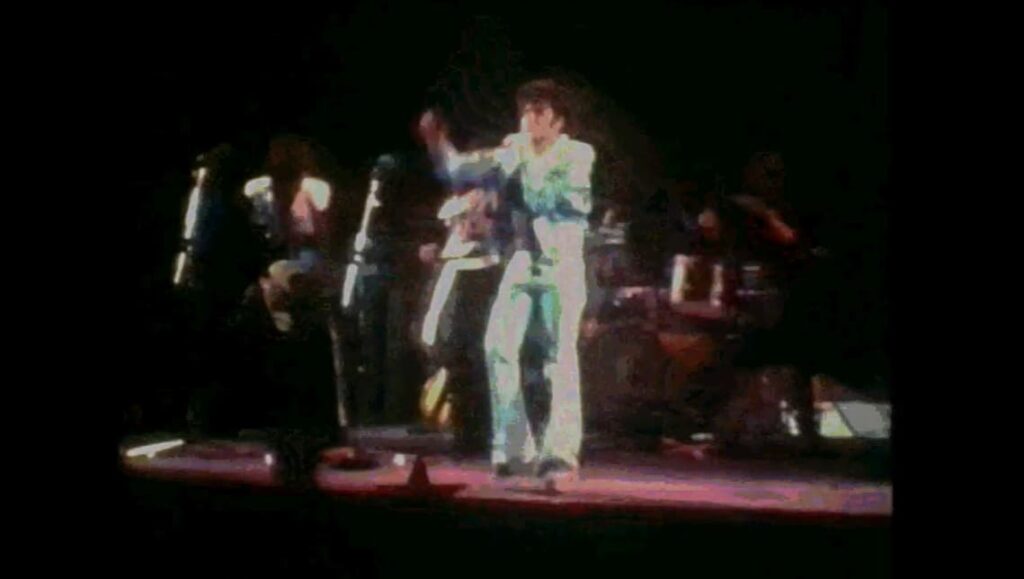
Before Punk Had a Name The Raw Pulse of a 1973 Concert Still Echoes.
In 1973, the stage of the Rainbow Theatre became the setting for a performance that would later define an era of spectacle and sound. Captured for the documentary Remember Me This Way, the concert featuring Gary Glitter stands today as both a historical artifact and a vivid reminder of how live music once bridged performer and audience in immediate, electrifying ways.
At the center of the event was not just a frontman, but a phenomenon. Glitter’s presence commanded attention through a combination of visual flair and rhythmic intensity. Backed by The Glitter Band, the performance leaned heavily on driving percussion and chant like refrains that invited participation rather than passive listening. The result was an atmosphere closer to a shared ritual than a conventional concert.
What distinguishes this show is its raw simplicity. The songs rely on direct structures and repetitive hooks, yet within that framework lies a powerful sense of momentum. The pounding rhythms and unified band dynamics create an effect that many later listeners have compared to early punk energy, even though the genre itself had not yet fully emerged. This connection continues to spark discussion among music fans who see glam rock not only as a visual movement but also as a precursor to something more stripped down and confrontational.
Behind the scenes, the concert reveals another layer of significance. Filmed for a documentary, it reflects a moment when artists were beginning to understand the importance of controlling their public narrative. The camera does not merely record the performance. It shapes how the event is remembered, turning fleeting moments into lasting impressions. For those who experienced the era firsthand, whether in the audience or behind the stage, the memory extends beyond the music to include the energy of the venue itself.
The Rainbow Theatre, once a central hub for major live acts in London, adds its own historical weight to the performance. Before its eventual closure, it hosted countless artists who defined the sound of the decade. This particular night now stands among those memories, representing a time when live shows carried a sense of unpredictability and communal excitement.
Yet the legacy of the performance is not without complexity. Modern audiences often approach it with mixed perspectives, separating the impact of the music from later controversies surrounding its central figure. This tension has only deepened the conversation around how art is remembered and evaluated over time.
Ultimately, the 1973 Rainbow Theatre concert endures because it captures something immediate and unfiltered. It shows a moment when sound, image, and audience response aligned to create an experience that still resonates decades later.