
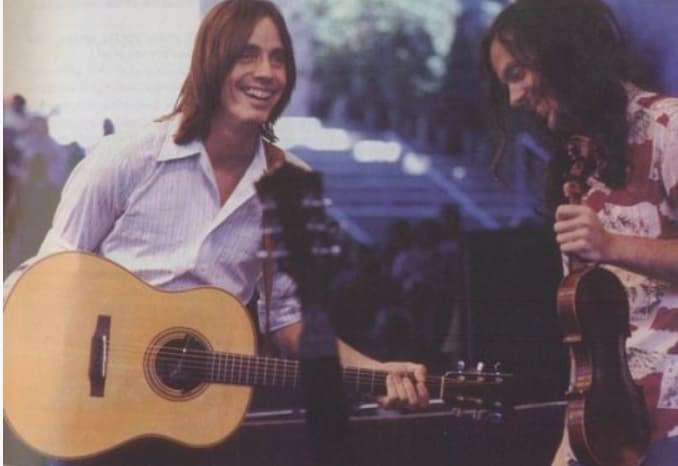
“These Days” Still Hurts Because It Still Feels True
When Jackson Browne performed “These Days” live in 1978, he was not delivering a dramatic stadium anthem or a technically overwhelming showcase. What remains remarkable about the performance today is its emotional restraint. Nearly five decades later, the recording continues to resonate because it communicates sorrow in a deeply human way without ever forcing it.
The performance has recently found renewed attention online through listeners who describe feeling overwhelmed by the emotional weight carried inside the song. Many comments reflect not only personal heartbreak, but also a broader grief connected to modern life itself. Some listeners speak about war, social division, environmental anxiety, or the strange exhaustion of simply living through the current era. Others describe the song as awakening memories of the 1970s so vivid that hearing it becomes almost painful.
Part of the lasting power of “These Days” comes from how carefully the musicians allow the emotion to breathe. Browne’s voice in the 1978 performance sounds reflective rather than theatrical. He sings with patience, allowing silence and space to become part of the storytelling. The song never rushes toward a climax. Instead, it quietly unfolds like someone revisiting old memories they are not sure they have fully survived.
A major part of the emotional atmosphere comes from David Lindley and his unforgettable pedal steel guitar work. Lindley does not simply accompany the song. His playing almost functions as a second voice inside it. The subtle distortion and aching tone create a feeling of vulnerability that perfectly matches the lyrics and mood. Even listeners discovering the performance for the first time often point directly to the pedal steel as the emotional center of the recording.
What makes this live version especially meaningful in 2024 is that it feels honest in a way many modern performances do not. There is no sense of spectacle or calculation. The musicians appear fully connected to the material and fully present in the moment. That sincerity allows audiences across generations to project their own experiences into the song.
For many people, “These Days” is no longer just a nostalgic piece from the 1970s. It has become a quiet companion for periods of uncertainty, loss, and reflection. The performance reminds listeners that sadness does not always need explanation to feel real. Sometimes music simply understands emotions before words can.
 Oldies Songs