
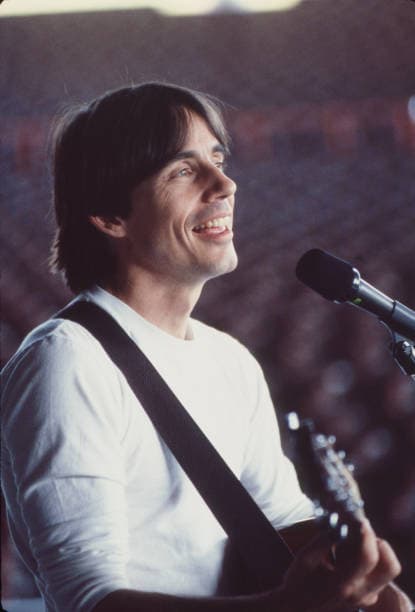
Light, Memory, and the Search for Meaning: Revisiting “Colors of the Sun” in Jackson Browne’s Early Work
In the early 1970s, as the singer songwriter movement continued to redefine American music, Jackson Browne released For Everyman, an album that quietly expanded his artistic voice. Among its most evocative tracks, “Colors of the Sun” stands as a reflective piece that reveals both the promise and the uncertainty of a young artist coming into his own.
Recorded across respected studios including Sunset Sound and Wally Heider Studios, the album benefited from a level of care that elevated its subtle arrangements. “Colors of the Sun” in particular demonstrates a refined approach to songwriting. Its structure is open and unhurried, allowing the listener to move through shifting images and impressions rather than a fixed narrative. The result is a composition that feels less like a conventional song and more like a meditation on time, perception, and change.
This period also marked the beginning of Browne’s long association with David Lindley, whose contributions would become essential to Browne’s sound. While the instrumentation on this track remains understated, it carries a quiet complexity. Each element is carefully placed, creating space rather than filling it. This restraint gives the song its distinctive character, inviting close listening rather than immediate impact.
The broader context of the album adds further depth. Following the success of “Take It Easy,” co written with Glenn Frey and popularized by Eagles, Browne faced the challenge of defining himself beyond collaboration. For Everyman answered that challenge not with grand gestures but with thoughtful progression. Critics noted improvements in both vocal control and lyrical sophistication, and over time the album’s reputation grew, eventually achieving both Gold and Platinum certification.
“Colors of the Sun” captures a specific artistic moment that continues to resonate. There is a sense of searching within the song, a willingness to dwell in ambiguity rather than resolve it. That quality reflects a broader theme in Browne’s work, where questions often carry more weight than answers. Decades later, the track retains its quiet power, offering listeners an experience that is both personal and open to interpretation.
In revisiting this recording, audiences are reminded that enduring music does not always announce itself with immediacy. Sometimes it unfolds gradually, revealing its depth over time. In that sense, “Colors of the Sun” remains a compelling example of how simplicity, when guided by insight and intention, can leave a lasting impression.