
From Then to Now: Why This Performance Feels Urgently Relevant Today
In an era saturated with noise, Jackson Browne’s “The Next Voice You Hear” stands apart as a rare moment of stillness that demands attention rather than applause. The live performance of this song offers more than music. It delivers a subtle yet powerful reflection on media influence, personal awareness, and the fragile line between truth and persuasion.
Originally produced under the guidance of T Bone Burnett, the track carries a restrained and atmospheric sound that shapes its identity. Browne’s acoustic guitar and measured vocal delivery create an intimate space, while Jon Hassell’s trumpet introduces a distant, almost otherworldly tone. The presence of longtime collaborator David Lindley on tambourine adds a quiet signature touch, reinforcing the artist’s philosophy of precision over excess.
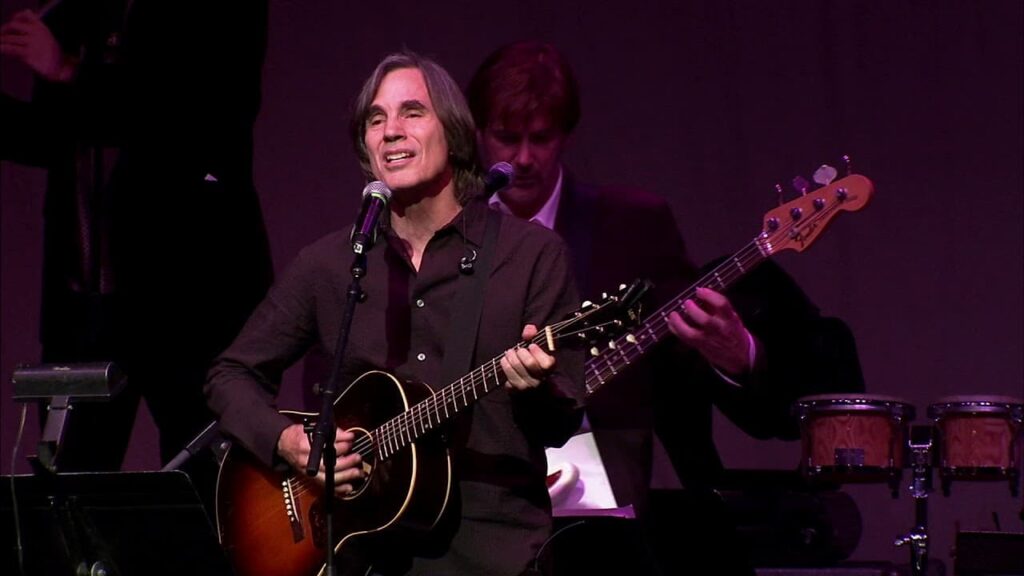
The opening moments of the performance often feel less like a song and more like a transmission. Browne’s voice enters gently, almost conversational, drawing the audience into a reflective state. There is no dramatic build or explosive chorus. Instead, the emotional weight accumulates gradually, inviting listeners to engage deeply with the message rather than react instinctively.
Written in a time shaped by geopolitical tension and shifting media landscapes, the song now resonates in a world defined by digital information, social platforms, and emerging technologies such as synthetic voices. The central question remains unchanged yet more urgent than ever. Who controls the narrative, and how do we choose what to believe?
The closing moments leave a lasting impression precisely because they offer no resolution. There is no clear answer, only an open space for thought. This ambiguity transforms the performance into a shared experience between artist and audience, where meaning continues to evolve beyond the final note.
For longtime fans, “The Next Voice You Hear” represents a deeper cut that reveals Browne’s introspective and socially conscious artistry. For newer listeners, it feels like a discovery that speaks directly to the present moment. In both cases, the performance proves that sometimes the quietest songs carry the most enduring impact.
As audiences revisit this piece today, its message feels less like a reflection of the past and more like a warning that never stopped being relevant.