
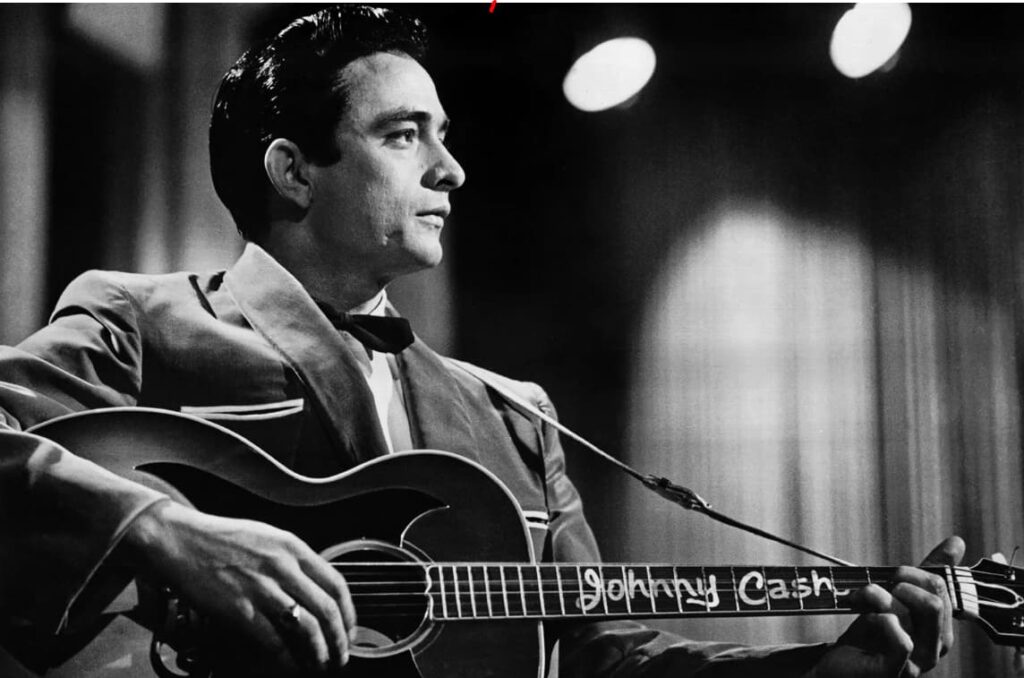
A Rhythm That Moved a Nation Inside Johnny Cash’s 1969 Television Moment
On a quiet stage at the Ryman Auditorium, a simple introduction from Johnny Cash was enough to command complete attention. No spectacle, no dramatic buildup. Just a voice, a presence, and a rhythm that would soon ripple through every corner of the room.
The performance of Get Rhythm on The Johnny Cash Show captured more than a song. It revealed a rare moment in television history where authenticity outweighed production, and connection mattered more than perfection. Broadcast at a time when American households gathered around their screens, the show placed Cash at the center of a cultural shift. He was no longer just a recording artist. He was a national voice.
Originally released in 1956 as a B side, Get Rhythm was never intended to be a defining hit. Yet on this stage, more than a decade later, it became something far greater. The song’s upbeat tempo and simple message about resilience transformed into a shared experience. Audience members did not remain passive listeners. They responded physically, clapping, moving, and absorbing the energy that flowed effortlessly from the stage.
There was no need for vocal acrobatics or elaborate arrangements. Backed by a tight and steady band, Cash delivered the song with a grounded confidence that reflected years of lived experience. His performance bridged the gap between storyteller and subject. The narrative of a young boy finding joy through hardship echoed in the man singing it. In that sense, Cash was not merely performing the song. He embodied it.
The broader context of the show adds another layer of significance. Airing between 1969 and 1971, The Johnny Cash Show welcomed some of the era’s most influential artists, yet Cash remained its undeniable anchor. His ability to shift from deeply emotional material to uplifting rhythms demonstrated a mastery of audience connection rarely seen in modern broadcasts.
What makes this particular performance endure is not its scale, but its sincerity. It stands as a reminder of a time when music on television felt immediate and human. No filters, no digital polish, just a man and his ability to make an entire room feel alive.
In the end, Get Rhythm was never just about a melody. It was about movement, resilience, and the quiet power of simplicity. And in that moment, Johnny Cash did not just perform a song. He created a rhythm that others could live by.