
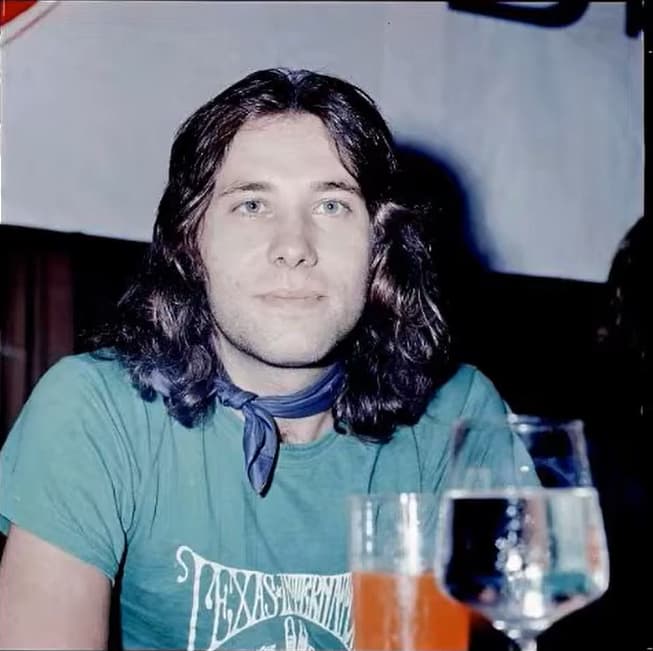
The Unveiling of a Sonic Democracy: Robert Lamm Breaks Decades of Silence to Relive the Blood, Sweat, and Triumphs of Chicago’s Early Architecture
The complex history of American popular music is occasionally punctuated by moments of shocking candor, where the carefully polished armor of a legendary band is stripped away to reveal the raw, unvarnished truth of creative survival. In the late months of nineteen eighty six, just a brief period following the monumental departure of singer Peter Cetera, keyboardist and founding visionary Robert Lamm sat down for an exceptionally loose, unprecedentedly private interview. Released as a treasure for dedicated purists, this historic conversation stands today as an invaluable holy grail for global music preservationists, capturing the chief songwriter operating at his absolute loosest while exploring the systemic friction, divine intervention, and unyielding brotherhood that defined the group’s primitive years.
Deeply diving into their initial formation, Lamm resurrects a forgotten era where a collective of ambitious Midwestern musicians bound themselves to lofty, radical ideals. Operating out of an overlooked metropolis, their burning collective goal was to bring national attention to the city of Chicago, which they perceived as being unfairly slided and passed over by the heavily praised sounds of San Francisco or Boston. Driven by a fierce artistic devotion, the group made a foundational handshake agreement that having a traditional frontman or marquee star was completely unimportant compared to the absolute sanctity of the compositions. Lamm vividly charts their primitive days as a vulnerable six piece outfit lacking a bass player, a period where he relied solely on organ foot pedals to maintain the lower frequencies.
In a beautifully cinematic recollection, Lamm describes the providential addition of Cetera, who was actively being pushed out by his own regional band, the Exceptions. When Cetera witnessed Lamm, guitarist Terry Kath, and horn player James Pankow executing intricate, brass heavy arrangements of Jimi Hendrix and the Mothers of Invention, his mind was completely blown by the sheer audacity of their sound. Cetera instantly accepted their invitation to join, cementing the legendary core lineup that would eventually welcome a brilliant Brazilian percussionist as their eighth member around their sixth album cycle.
The emotional crescendo of the interview uncovers the immense systemic frustration of late nineteen sixty eight, when the band literally showed up on the doorstep of producer James William Guercio, demanding to enter the studio. Lamm’s famously provocative, unfiltered commentary regarding their dictatorial relationship with Guercio beautifully mirrors the heavy price of creative independence within a predatory industry. Operating in a golden epoch completely free from modern digital tracking or sterile studio alterations, this rare archival gem provides a profound sense of vindication and deep historical pride for lifetime followers. Ultimately, this magnificent nineteen eighty six interview remains an indispensable masterpiece of music journalism, ensuring that the true, unvarnished legacy of Chicago will continue to inspire music lovers across the globe.