
A Forgotten Broadcast That Reveals Slade Before Fame.
In an era when British rock was fiercely competitive and rapidly evolving, a little seen television performance of “Wild Winds Are Blowing” offers a rare and revealing glimpse into a band not yet fully formed. Long before anthems would define their legacy, Slade appeared on national television in 1969 carrying a sound and image that felt strikingly out of sync, yet historically fascinating.
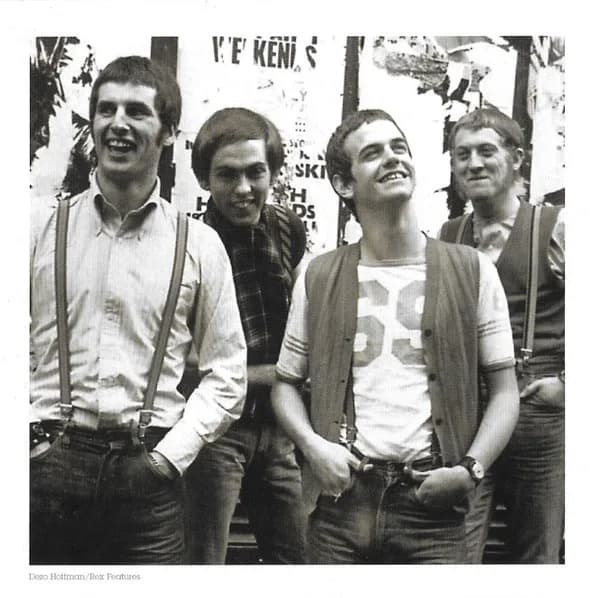
At the time, the group had recently transitioned from Ambrose Slade into a rebranded act under the guidance of Chas Chandler, known for shaping artists with a keen sense of visual identity. The decision to adopt a skinhead look was deliberate, designed to provoke attention and separate the band from the psychedelic wave that dominated the late sixties. However, behind the tough exterior was a group still searching for its musical voice.
The performance itself captures that tension. Visually, the band projects a hardened working class image, defined by cropped hair and heavy boots. Musically, however, “Wild Winds Are Blowing” leans toward a softer, almost conventional pop rock arrangement. This contrast becomes the most compelling aspect of the clip. It is not a failure of cohesion, but rather a document of artistic negotiation.
Another layer of intrigue lies in the song’s origin. Unlike the material that would later cement their identity, this track was not written by the band. That detail adds a subtle sense of detachment to the performance, as if the musicians are interpreting rather than expressing. It is a reminder that many iconic acts begin their journey performing songs that do not yet reflect who they truly are.
For viewers familiar with the explosive presence of Noddy Holder in the early seventies, this footage feels almost surreal. The raw vocal aggression and communal energy that would later define Slade are only faintly visible here. Yet, in moments of rhythm and delivery, there are early hints of the stomping intensity that would soon emerge.
What makes this performance valuable is not its polish, but its honesty. It captures a band in transition, navigating external expectations while inching toward authenticity. For modern audiences, it functions as both a historical artifact and a narrative turning point.
In retrospect, “Wild Winds Are Blowing” is less about what Slade was, and more about what they were becoming.