
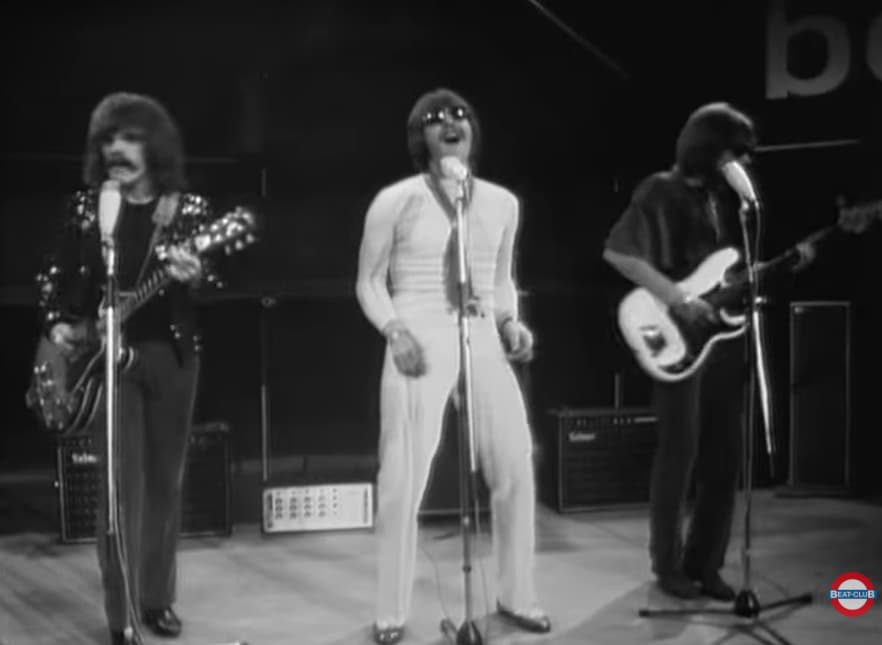
The Untamed Blueprint of Heavy Rock: How The Move Defied Broadcasting Censorship and Pioneered a Sonic Revolution with Wild Tiger Woman
The chaotic evolutionary timeline of British rock music is occasionally marked by magnificent injustices, moments where conservative institutions actively choked the progress of artistic visionaries who were operating lightyears ahead of their contemporaries. In the fiery creative landscape of nineteen sixty eight, the legendary Birmingham collective known as The Move unleashed a masterclass in heavy, boundary pushing songwriting titled “Wild Tiger Woman.” A professionally significant archival video preserves this astonishing document of early heavy rock, standing today as an invaluable historical holy grail for music preservationists worldwide, resurrecting a golden age when a band could sound completely dangerous, uncompromising, and vastly ahead of their time.
To absorb this rare nineteen sixty eight performance is a profoundly moving journey that triggers an immediate, overwhelming wave of pure nostalgia and fierce historical pride. Led by the towering songwriting genius of Roy Wood and featuring the flawless, powerhouse vocals of main lead singer Carl Wayne, the track possesses an awesome, gritty groove that instantly commands attention. While the group scored a staggering nine Top Twenty United Kingdom singles in a brief five year span, they famously remained one of the most popular British bands to never find major commercial success across the Atlantic Ocean. This specific composition brilliantly captures their heavy concert identity, showcasing an unmatched vocal chorus where Wood, Wayne, and bassist Trevor Burton blended their voices into a roaring wall of sound.
The true emotional weight of this resurrected archive lies in its status as a misunderstood, boycotted masterpiece. Despite its immense originality and historic influence, the song became Roy Wood’s very first chart failing single due to a short sighted boycott by mainstream radio programmers. The BBC foolishly banned the track from the airwaves over a single playful line of lyrics describing a woman tied to the bed waiting to be fed, while daytime disc jockeys like Tony Blackburn openly expressed disdain, claiming the heavy amplification sounded like the Battersea Power Station roaring through the speakers. This systematic censorship effectively murdered the single’s commercial trajectory, creating a fascinating internal rift where Burton completely adored the heavy direction while Wayne harbored reservations.
Listening closely to the murky, beautifully textured mono mix reveals that The Move were far more than an ordinary beat group, forging a heavy rock template that modern listeners can hear echoed decades later in alternative anthems like the Foo Fighters song “Resolve.” Wood closes the track with a spectacular, sweet nod to blues legend Elmore James, executing a brilliant guitar riff that highlights his multi instrumental mastery. Although the song was tragically robbed of its rightful number one status, Wood would immediately bounce back with his very next composition, “Blackberry Way,” which triumphantly conquered the top spot on the national charts. Ultimately, this rare television artifact remains an indispensable triumph, ensuring that the brilliant, unyielding legacy of The Move will continue to provide deep historical inspiration for true rock purists until the end of time.