
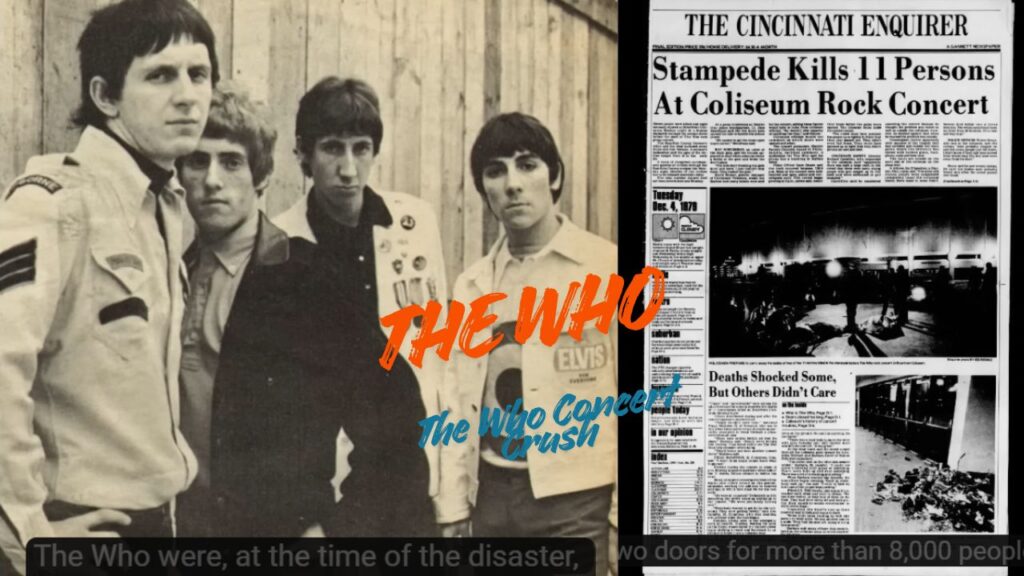
The Who Concert Tragedy: The Night a Celebration of Music Turned Into Disaster
On December 3, 1979, thousands of fans gathered outside the Riverfront Coliseum in Cincinnati, Ohio, eager to see The Who perform live. For many, it was supposed to be a memorable evening with one of the world’s most celebrated rock bands. Instead, the event became one of the deadliest concert related tragedies in American history.
At the time, the venue used a festival seating system, which meant that many seats were available on a first come, first served basis. Fans hoping to secure the best spots had waited outside for hours in cold weather. As anticipation grew, confusion began to spread among the crowd.
According to accounts from survivors and later investigations, many people believed the concert was about to begin after hearing sounds from inside the venue. Some witnesses later recalled that what fans heard may have been part of a sound check. As the crowd surged forward toward the entrance doors, thousands of people found themselves compressed into a dangerously crowded space.
The pressure quickly became overwhelming. People in the front were trapped against doors and barriers while those behind continued moving forward, often unaware of the conditions ahead. In the chaos, several concertgoers were unable to breathe. By the time emergency responders gained control of the situation, 11 people had lost their lives and many others had been injured.
One of the most heartbreaking aspects of the tragedy was that many attendees inside the arena remained unaware of what had happened outside. The concert ultimately went ahead as scheduled while emergency personnel worked to assist victims and manage the unfolding crisis.
Years later, survivors continued to share their memories of that night. Some described the confusion and fear of being caught in the crowd. Others reflected on how close they had come to becoming victims themselves. Many spoke of the lasting emotional impact the experience had on their lives.
The Cincinnati concert crush remains a defining moment in discussions about crowd safety. The disaster prompted widespread examination of venue procedures and contributed to changes in how large events are organized and managed. Modern crowd control systems, organized queue barriers, and stricter safety planning are often viewed as part of the lessons learned from tragedies such as this one.
More than four decades later, the events of December 3, 1979, remain a solemn reminder that excitement and anticipation can quickly turn dangerous when crowd safety is overlooked. The memory of the victims continues to shape the way concerts and large public gatherings are managed around the world.