
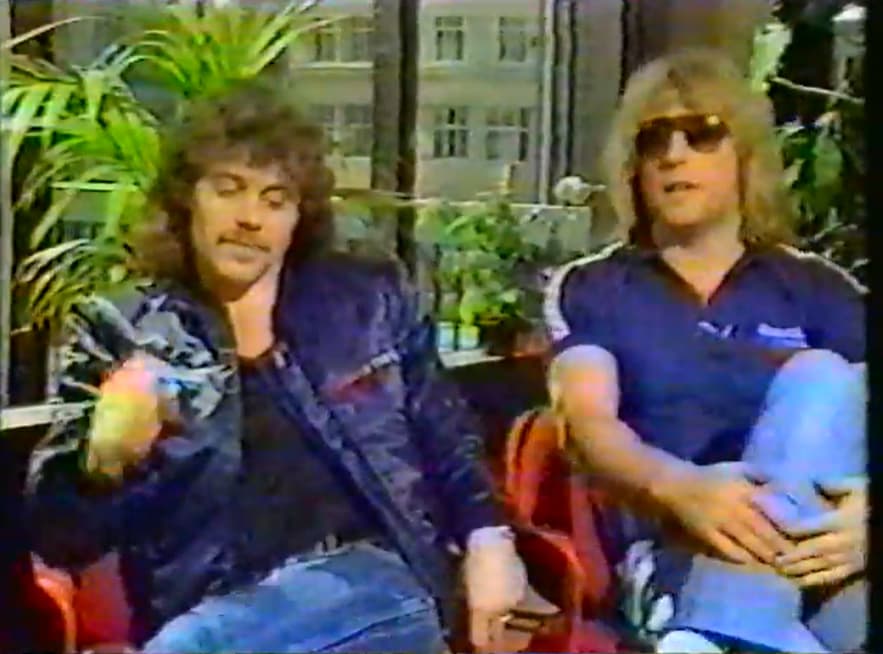
“End of the Road?” Status Quo Reflect on 17 Years of Touring in a Candid 1984 Interview
In 1984, members of the British rock institution Status Quo spoke with striking honesty about the future of the band during what was being promoted as the “End of the Road” tour. In a short but revealing interview, bassist Alan Lancaster and guitarist and vocalist Rick Parfitt addressed the rumors surrounding whether the tour might truly mark the final chapter of one of rock’s most relentlessly touring groups.
By the mid nineteen eighties, Status Quo had already spent nearly two decades on the road. Lancaster acknowledged the sheer exhaustion that came with such a long commitment to touring. The band had been traveling continuously for about seventeen years, performing across Europe and beyond. For musicians who built their reputation on high energy live performances, the pace had inevitably taken its toll.
The 1984 tour carried a symbolic title that naturally raised questions among fans and journalists. When asked directly whether this “End of the Road” tour meant the end of Status Quo itself, the response was measured rather than dramatic. Lancaster explained that after nearly two decades of constant touring, the band members simply felt they had reached a point where they had experienced enough of life on the road. It was less about a dramatic breakup and more about acknowledging the fatigue that comes with years of global travel.
Despite this sense of weariness, the tour schedule remained ambitious. The band continued its route across major cities, including shows in Newcastle and Scotland before eventually returning to London. One of the final performances of the tour was planned at the famous Crystal Palace, where organizers expected a crowd of around fifty thousand people. Lancaster hinted that the closing show would be full of surprises, suggesting the band intended to give fans a memorable finale.
During the interview, Lancaster also reflected on the early days of Status Quo and the musical environment that shaped the group. He recalled formative experiences in rehearsal rooms and small music spaces where the band first developed its sound. These humble beginnings contrasted sharply with the massive crowds the band was now attracting around the world.
Rick Parfitt offered insight into why Status Quo had managed to endure for so long when many other rock bands had faded away. According to Parfitt, the key lay in the relationship between the band and its audience. Fans felt comfortable with Status Quo because the group maintained a straightforward, hardworking approach to live performance. Their concerts were intense and energetic, often lasting well over an hour, and the band gave as much effort on stage as the crowd did in response.
Parfitt noted that the band always worked hard during their shows, delivering performances that left both the musicians and the audience exhausted but satisfied. This shared experience helped create a loyal fan base that continued to support the band year after year.
Looking back, the 1984 interview captures a moment of uncertainty for Status Quo. After nearly twenty years of relentless touring, the musicians were openly questioning how long they could continue at such a pace. Yet even as they discussed the possibility of slowing down, their commitment to delivering powerful live shows remained unmistakable. For fans attending those final dates of the tour, the message was clear. Status Quo intended to go out playing exactly the way they had built their reputation, loud, hardworking, and fully dedicated to their audience.