
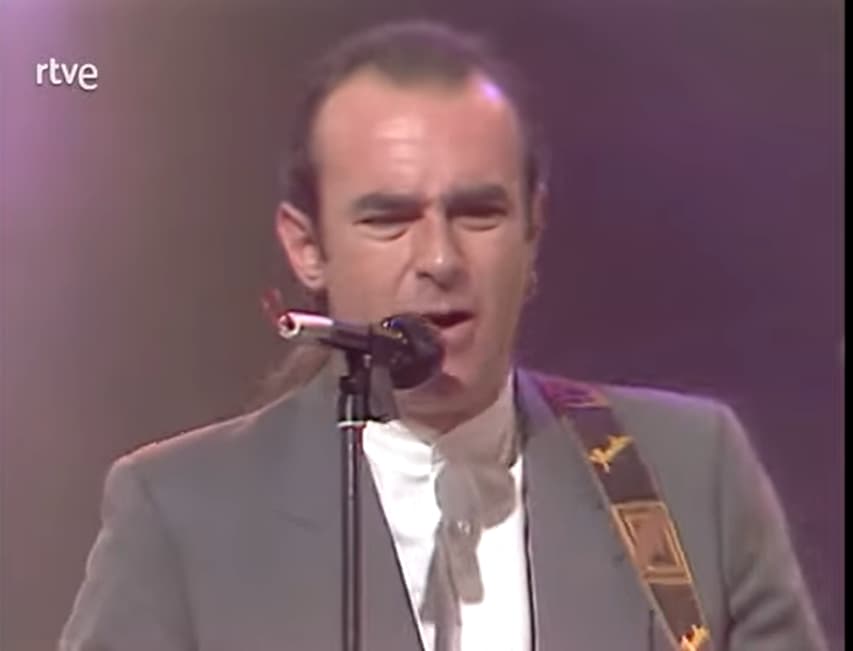
A Televised Snapshot of Transition: Status Quo’s “Ain’t Complaining” on Spanish TV in 1988
A performance of “Ain’t Complaining” on the Spanish television program A Tope, broadcast on June 22, 1988, provides a concise view of Status Quo during a period of transition. Recorded as part of the show’s second season and presented by Eva Mosquera, the clip reflects both the promotional demands of late 1980s television and the evolving identity of the band.
At the time, “Ain’t Complaining” was a recent release, and the appearance on A Tope functioned primarily as a promotional vehicle. As was common for television productions of the era, the performance appears to rely on playback from the studio recording rather than a fully live setup. Observers have noted that the band likely used locally provided instruments for the shoot, a practical solution for touring acts moving quickly between international appearances.
This detail is particularly noticeable in the visual presentation. Longtime followers of Status Quo were accustomed to seeing Francis Rossi and Rick Parfitt with their signature Telecaster guitars. In this broadcast, both appear with Stratocasters, creating a visual contrast that stands out even to casual viewers. Similarly, bassist John Edwards is seen with a different instrument than his usual setup, reinforcing the impression of a production shaped by logistical constraints.
Despite these differences, the band delivers a controlled and professional presentation. The track itself reflects the polished rock style that characterized Status Quo’s output in the late 1980s, with a steady tempo, clear structure, and accessible melodic phrasing. While it diverges from the rawer energy of their earlier years, it demonstrates an adaptation to contemporary production standards and audience expectations.
The performance also arrives at a time when the band’s lineup had undergone significant changes. The absence of founding bassist Alan Lancaster, who had relocated to Australia and was active in other projects, marked a shift in both sound and internal dynamics. For some fans, this period represents a departure from what they consider the group’s definitive era, often associated with the original core lineup.
Reactions to the clip reflect this divide. While some appreciate the song’s structure and the band’s continued presence on international television, others view it as evidence of a broader stylistic change. The contrast between earlier and later phases of Status Quo’s career becomes especially visible in performances like this, where visual cues, instrumentation, and arrangement all contribute to perception.
As a historical document, the A Tope broadcast captures more than a single song. It records a moment when Status Quo was balancing continuity with change, maintaining visibility across markets while adapting to the practical and artistic realities of the late 1980s music industry.