
A Hidden Voice from a Legendary Stage: Chicago’s “Loneliness Is Just A Word” Finally Finds Its Moment
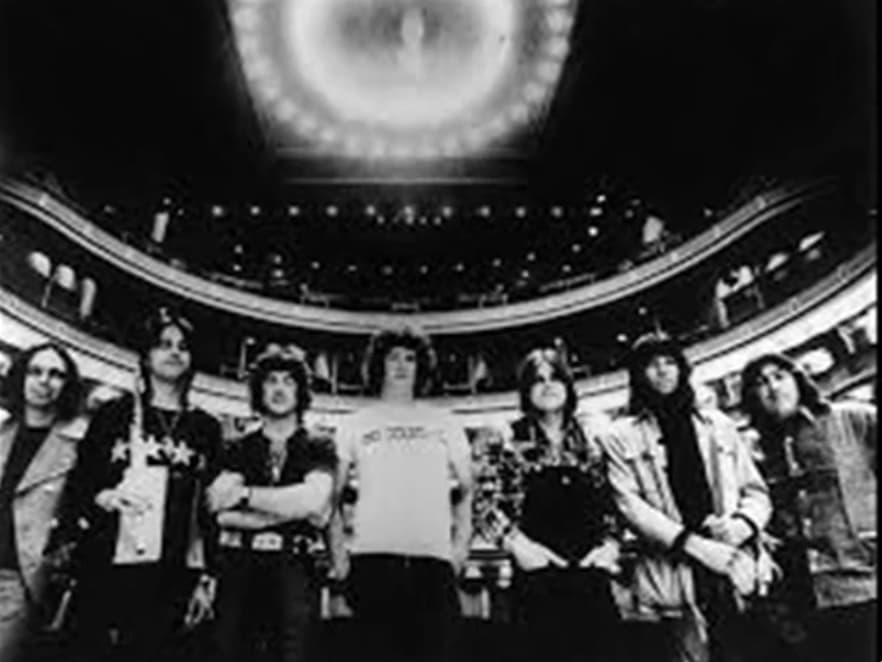
In the vast archive of classic rock performances, certain recordings carry a sense of delayed revelation. The live version of “Loneliness Is Just A Word” from Chicago at Carnegie Hall in 1971 stands as one of those rare discoveries. Captured during a defining series of concerts yet left unreleased for decades, the performance resurfaced in 2005 as part of a remastered collection, offering listeners a powerful glimpse into the band’s formative years.
Written by Robert Lamm, the song explores the idea of loneliness not as a permanent condition but as something that can be reshaped by perspective. In this live setting, that concept gains new depth. The arrangement unfolds with patience, allowing each instrument to enter with purpose. Lamm’s organ establishes a reflective foundation before the rhythm section, led by Peter Cetera and Danny Seraphine, builds a steady and controlled momentum.
At the center of the performance is Terry Kath, whose vocal delivery transforms the song into something deeply human. His voice does not rely on polish or theatricality. Instead, it carries a raw sincerity that draws the listener into the emotional core of the composition. Kath’s guitar work complements this approach, adding texture without overwhelming the ensemble.
The horn section, featuring James Pankow, Lee Loughnane, and Walt Parazaider, plays a defining role in shaping the performance. Rather than serving as background, the horns act as a unifying force, weaving melodic lines that elevate the song’s structure and reinforce its message. Their presence underscores Chicago’s unique ability to merge rock intensity with orchestral complexity.
The setting itself adds another layer of significance. Carnegie Hall, long associated with classical tradition, becomes a stage for a different kind of musical expression. Chicago’s appearance there reflects a moment when rock music expanded its boundaries, proving it could carry both artistic ambition and emotional weight within even the most formal environments.
The closing moments of the performance resist conventional resolution. Instead of a dramatic ending, the music gradually opens outward, leaving a lingering impression rather than a definitive conclusion. This choice mirrors the song’s central idea, suggesting that emotional states are not fixed but continuously evolving.
For modern audiences, this recording offers more than historical interest. It reveals a band unafraid to challenge expectations and a song that gains greater meaning with time. In finally reaching listeners after years of silence, “Loneliness Is Just A Word” affirms that some performances are not confined to their era. They simply wait to be heard.