
A Lonely Street, A Timeless Voice: Patsy Cline’s “Walkin’ After Midnight” Still Holds the Stage
In a performance that feels suspended between theater and song, Patsy Cline transforms “Walkin’ After Midnight” into something far greater than a hit single. The live rendition captures a moment when popular music relied not on spectacle, but on presence, phrasing, and emotional truth.
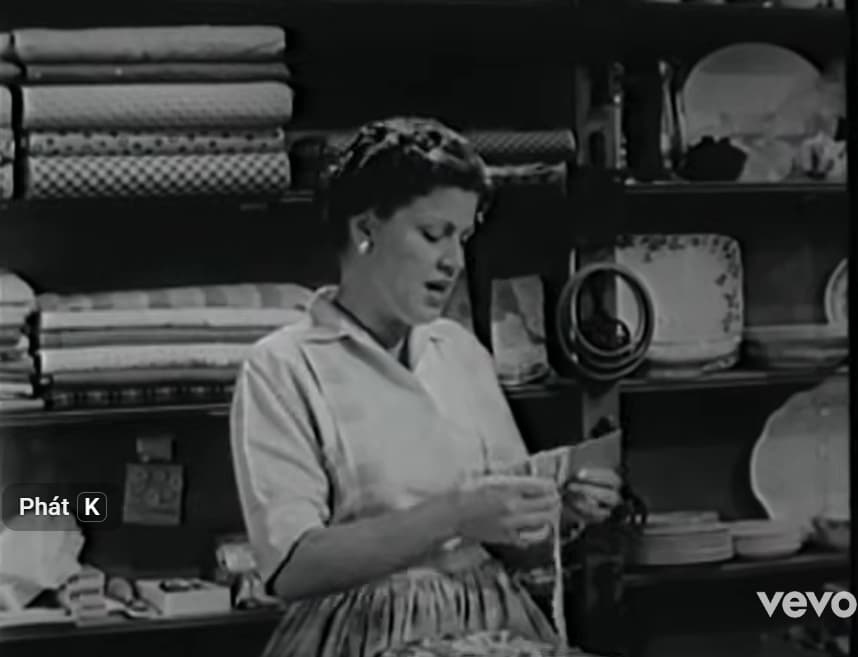
Originally brought to national attention through her appearance on Arthur Godfrey’s Talent Scouts in 1957, the song became the breakthrough that reshaped Cline’s career. It introduced her to a wide audience and marked one of the earliest successful crossings between country and pop sensibilities. What is striking in this live performance is how little she needs to recreate that impact. There is no elaborate staging, no choreography designed to command attention. Instead, she stands almost still, allowing the narrative within the song to unfold through voice alone.
That restraint is precisely what gives the performance its power. “Walkin’ After Midnight” is built on a sense of quiet longing, a solitary figure moving through darkness in search of connection. Cline does not exaggerate these emotions. She delivers them with control and subtlety, shaping each phrase with care. The pauses carry as much meaning as the notes themselves. It feels less like a performance and more like a confession shared in real time.
There is also a deeper layer of human resilience behind the image. Following a serious car accident in 1961, Patsy Cline continued to appear on stage while still recovering, at times wearing a headband to manage lingering pain. For viewers aware of this history, even the smallest visual detail takes on added significance. The calm exterior conceals a determination that mirrors the emotional endurance within the song.
For many who first encountered her on television broadcasts decades ago, this performance is inseparable from memory itself. It recalls an era when families gathered around a single screen, when a voice like Cline’s could command silence across a room. That connection between artist and audience was immediate and lasting, and it remains evident even now.
From a technical perspective, her singing continues to invite admiration. The phrasing is fluid, the pitch unwavering, the delivery free of unnecessary embellishment. It is a style that appears effortless yet resists imitation, even among trained vocalists. That paradox is part of what sustains her legacy.
Seen today, this performance raises a question that continues to resonate. In a time defined by constant movement and visual excess, can a single voice, standing still, still hold an audience completely. Patsy Cline’s answer, preserved in this moment, remains unmistakably clear.
 Oldies Songs