
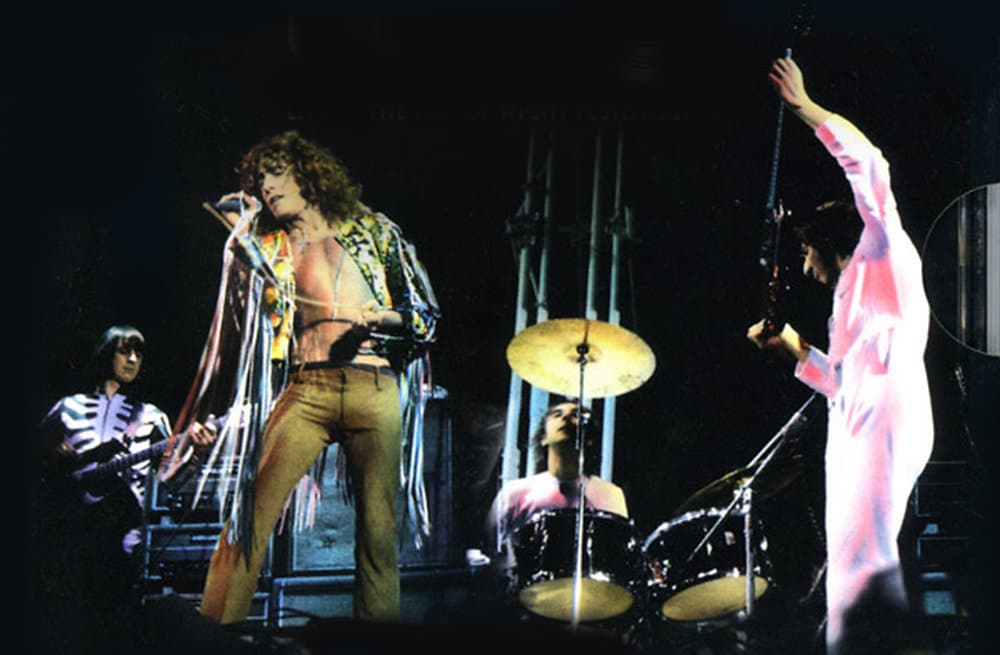
At Two in the Morning, a Legend Ignites: The Who and “Pinball Wizard” at Isle of Wight 1970
In the early hours of August 30, 1970, a defining moment in rock history unfolded before an immense sea of humanity. As the clock passed 2 a.m., The Who took the stage at the Isle of Wight Festival, facing a crowd estimated at 600,000. What followed was not merely a performance but an event that would come to symbolize the raw power and ambition of live rock music at its peak.
At the center of this moment stood “Pinball Wizard,” a standout piece from the band’s groundbreaking album Tommy. Originally conceived as part of a larger narrative, the song had already achieved widespread recognition as a single. Yet in this setting, its meaning expanded. Removed from the confines of a concept album and placed before a vast audience, it transformed into a direct and electrifying exchange between band and crowd.
The lineup on stage represented one of the most formidable ensembles in rock history. Roger Daltrey delivered vocals with commanding intensity, while Pete Townshend drove the performance with precision and physicality. John Entwistle provided a powerful low end foundation, and Keith Moon infused the music with unpredictable energy. Together, they created a sound that was both controlled and explosive, a balance that defined the band’s identity.
The timing of the performance contributed significantly to its atmosphere. Taking place deep into the night, it carried a sense of intensity that bordered on the surreal. The audience, far from fading, seemed to draw energy from the moment, responding with a collective force that matched the band’s output. This interaction elevated the performance beyond a standard concert, turning it into a shared experience of remarkable scale.
Modern restoration efforts have further enhanced the significance of this recording. Directed originally by Murray Lerner, the footage has been carefully restored, while the audio has been remixed under the supervision of Pete Townshend. The result is a version that brings contemporary clarity to a historic event, allowing new audiences to engage with it as if present.
Viewed today, the performance invites reflection on what defines a great live act. It raises questions about scale, authenticity, and the relationship between artist and audience. In this instance, The Who provides a compelling answer. Through “Pinball Wizard,” they demonstrate that when vision, execution, and timing align, a performance can transcend its moment and become part of cultural history.
 Oldies Songs