
Dawn Met Distortion: The Who’s Defining Moment at Woodstock 1969
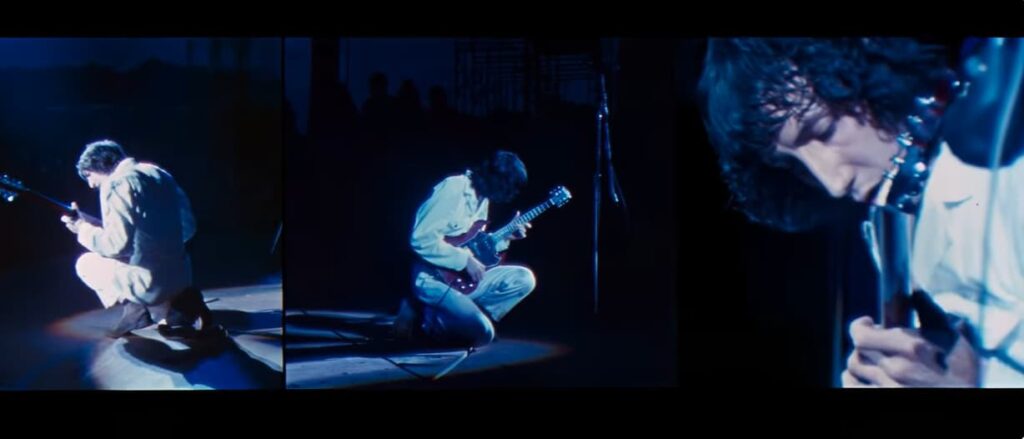
In the early hours of August 17, 1969, as the sky over Bethel, New York began to lighten, The Who delivered a performance that has since become one of the most discussed and analyzed moments in live rock history. Captured during the legendary Woodstock Music Festival, the closing solo passage led by Pete Townshend stands as a powerful convergence of timing, atmosphere, and musical intent.
This segment, often referred to by fans as the “Pete solo ending,” unfolds at a transitional moment both musically and culturally. The band had already pushed through a demanding overnight set, yet what emerges here is not fatigue but precision. Townshend’s chord progression aligns almost uncannily with the first visible hints of daylight, creating a natural synchronization between sound and environment. It is not merely a performance but a moment shaped by circumstance, where the rising sun becomes an unplanned yet integral part of the stage design.
From a technical perspective, the band’s control over dynamics is striking. Keith Moon maintains a volatile but responsive rhythm, adapting to Townshend’s shifting tempo, while John Entwistle reinforces the harmonic structure with a bass approach that often mirrors lead guitar phrasing rather than traditional support. Roger Daltrey, though less central in this specific passage, anchors the performance with a presence that reflects the band’s growing command of large scale audiences.
What makes this footage particularly compelling is its rawness. The audio is powerful, sometimes overwhelming, reflecting the limitations and intensity of live sound engineering at the time. A brief interruption by the PA announcer, introducing the band mid transition, adds an unexpected layer of authenticity. Rather than disrupting the flow, it emphasizes the scale of the event and the logistical chaos surrounding it.
The historical context is equally important. By 1969, The Who had already established themselves through relentless touring and high profile appearances, yet Woodstock offered a different kind of validation. Performing material connected to their ambitious rock opera Tommy, they were not simply playing songs but presenting a conceptual identity to a massive and diverse audience.
Viewers today often debate whether this moment represents the peak of The Who’s live power or simply one of many great performances from that era. Some point to the imperfect synchronization in surviving footage, where audio and visuals occasionally drift, as a distraction. Others argue that these imperfections enhance the experience, preserving the immediacy of a time when live music was unpredictable and unfiltered.
More than five decades later, this dawn performance continues to resonate because it captures something rare. It is a band operating at full intensity, an audience witnessing history in real time, and a fleeting alignment between music and the natural world that cannot be recreated.
Video:

 Oldies Songs