
Behind Blue Eyes and the Quiet Power of Rock’s Inner World .
More than half a century after its release, “Behind Blue Eyes” by The Who continues to command attention not through spectacle, but through emotional architecture. First introduced on the landmark 1971 album Who’s Next, the song stands apart as a study in contrast, restraint, and eventual release.
Written by Pete Townshend, the track emerged from the ambitious but ultimately abandoned Lifehouse project. Within that larger narrative, the song was intended for a complex antagonist, a figure defined not by simple villainy but by internal conflict. This origin gives the composition an unusual psychological depth. Rather than presenting a conventional love lament, it unfolds as a confession from someone burdened by their own identity.
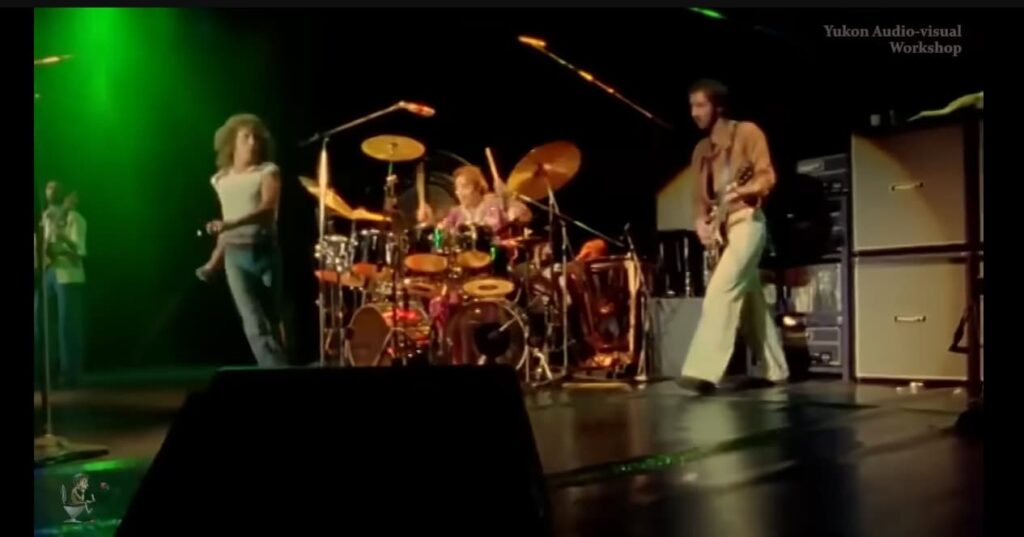
The performance itself, particularly in live settings, reinforces this duality. The opening passages are intimate, almost fragile, led by acoustic textures and a vocal delivery from Roger Daltrey that favors control over force. There is a sense of stillness that draws audiences inward, as though the arena has momentarily narrowed into a private space. Then comes the shift. Electric instrumentation surges forward, transforming introspection into confrontation. This dynamic progression has become one of the defining characteristics of the band’s live interpretation, creating a palpable tension that resolves only in the song’s final moments.
For listeners who experienced the early seventies firsthand, the track carries a strong current of nostalgia. It reflects a period when rock music was expanding its thematic reach, exploring identity and vulnerability alongside rebellion. The album itself is often cited among the greatest ever recorded, not simply for its innovation, but for its cohesion and emotional clarity.
Debate continues to surround the song’s legacy. The 2003 reinterpretation by Limp Bizkit introduced the composition to a new generation, achieving commercial success while dividing opinion. Some listeners appreciate its modernized production and stylistic shift, while others argue that it dilutes the introspective core that made the original so enduring. This contrast has only reinforced the stature of The Who’s version as a benchmark.
What ultimately sustains “Behind Blue Eyes” is its refusal to offer easy answers. It presents strength and vulnerability not as opposites, but as intertwined forces. In both recording and performance, the song invites listeners to confront the quieter parts of themselves. That invitation remains as compelling today as it was in 1971.
 Oldies Songs