
A Brief Break and a Lasting Voice: Danny Joe Brown’s Solo Turn in “Nobody Walks On Me”
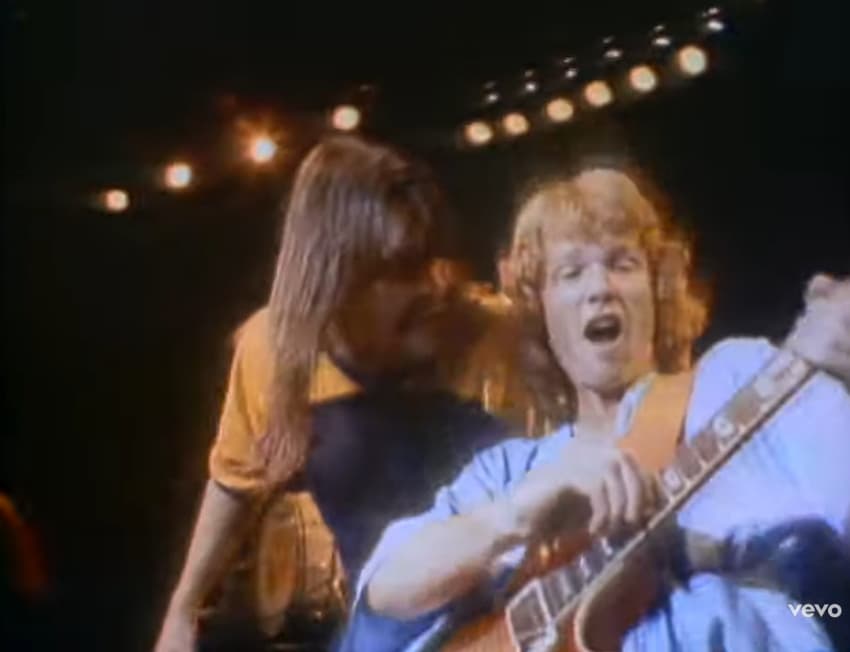
In the mid 1980s, Danny Joe Brown stepped away from Molly Hatchet and delivered a short but revealing chapter of his career through the The Danny Joe Brown Band. The official video for “Nobody Walks On Me” stands as one of the clearest documents of that period, capturing both continuity and change in his musical identity.
The lineup supporting Brown included Bobby Ingram, Steve Wheeler, Kenny McVay, John Galvin, Buzzy Meekin, and Jimmy Glenn. While the personnel differed from Molly Hatchet’s classic formation, the sonic direction remained firmly rooted in Southern rock. The guitars retain a layered, driving presence, and the rhythm section emphasizes steady, grounded momentum rather than experimentation.
“Nobody Walks On Me” reflects a lyrical stance consistent with Brown’s established persona. The theme of resilience and personal defiance aligns closely with the attitude that defined his earlier work. There is no dramatic reinvention here. Instead, the track reinforces the qualities that had already made him recognizable. His vocal delivery remains rough edged and forceful, carrying a tone shaped as much by experience as by technique.
The question of why Brown left Molly Hatchet has been discussed among fans for decades. The available information points to a combination of factors rather than a single cause. Health issues, including complications related to diabetes, played a significant role during this period. At the same time, internal tensions and the broader pressures of touring and recording likely contributed to the decision. His move into a solo project appears less like a permanent departure and more like a temporary shift in direction.
The relatively short lifespan of The Danny Joe Brown Band, lasting roughly a year and a half, reinforces that interpretation. It was not a long term reinvention, but a moment of recalibration. Brown would eventually return to Molly Hatchet, reestablishing his place within the band’s legacy.
From a historical perspective, the video offers value beyond the song itself. It documents an artist navigating uncertainty while remaining committed to a core musical identity. The performance does not attempt to follow changing trends of the decade. Instead, it stays grounded in the style that had already defined his career.
Today, “Nobody Walks On Me” stands as a reminder that even brief detours can reveal important aspects of an artist’s trajectory. For listeners interested in Southern rock history, it provides a direct look at Danny Joe Brown during a transitional moment, one where the voice remained constant even as the path temporarily shifted.