
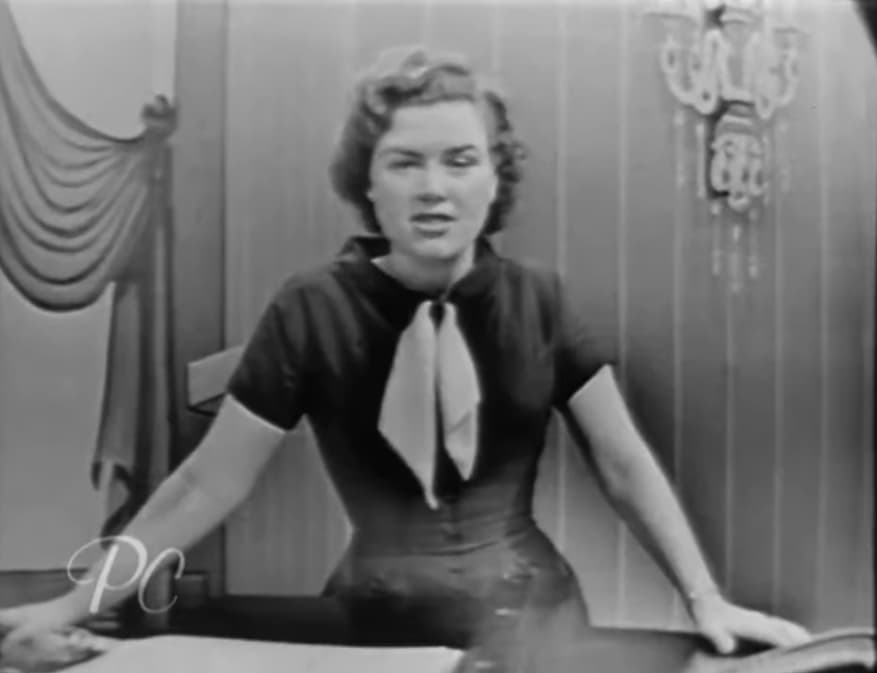
A Rare Window Into Country Music History
A rare television recording of Walkin After Midnight has recently resurfaced online, offering viewers a striking glimpse of Patsy Cline during a defining moment early in her career. The footage, recorded in 1957 on a television soundstage, captures Cline performing her breakthrough Top 10 hit with a clarity and confidence that would later cement her place in country music history.
The video was originally shared on Facebook by the page Heppest of the Hep, quickly circulating among music enthusiasts and historians. In the clip, Cline performs live alongside a small but highly skilled ensemble. Guitarists Grady Martin and Hank “Sugar Foot” Garland provide the instrumental foundation, while influential producer Owen Bradley accompanies on piano. The setting is simple, yet the performance carries a strong sense of musical precision and emotional depth.
At the time of this recording, Cline was still building her national reputation. However, the performance reveals an artist already in full command of her vocal identity. Her delivery of Walkin After Midnight demonstrates a balance between restraint and emotional expression, a quality that would later become one of her most defining artistic traits. The song itself, which helped launch her into mainstream recognition, is performed here with a natural ease that reflects both technical skill and personal connection to the material.
Born in 1932, Patsy Cline would go on to become one of the most influential voices in American country music before her untimely death in a plane crash in 1963. Her legacy includes a series of landmark recordings that bridged traditional country sounds with a more polished, emotionally expressive style that helped shape the genre’s future direction.
What makes this rediscovered footage particularly significant is its historical authenticity. It presents Cline not as a retrospective icon, but as a working artist in real time, performing live in a studio environment that reflects the early era of televised music. There are no modern enhancements or studio corrections, only the raw interaction between singer, musicians, and live audience context.
For many viewers, the video offers more than nostalgia. It provides a rare opportunity to witness the formation of a musical legacy that continues to influence artists today. As digital platforms continue to unearth archival recordings, performances like this remind audiences that the foundations of modern music are deeply rooted in moments captured long before the digital age.
This 1957 performance stands as a testament to Patsy Cline’s enduring artistry and the timeless quality of her voice, which continues to resonate more than half a century later.