
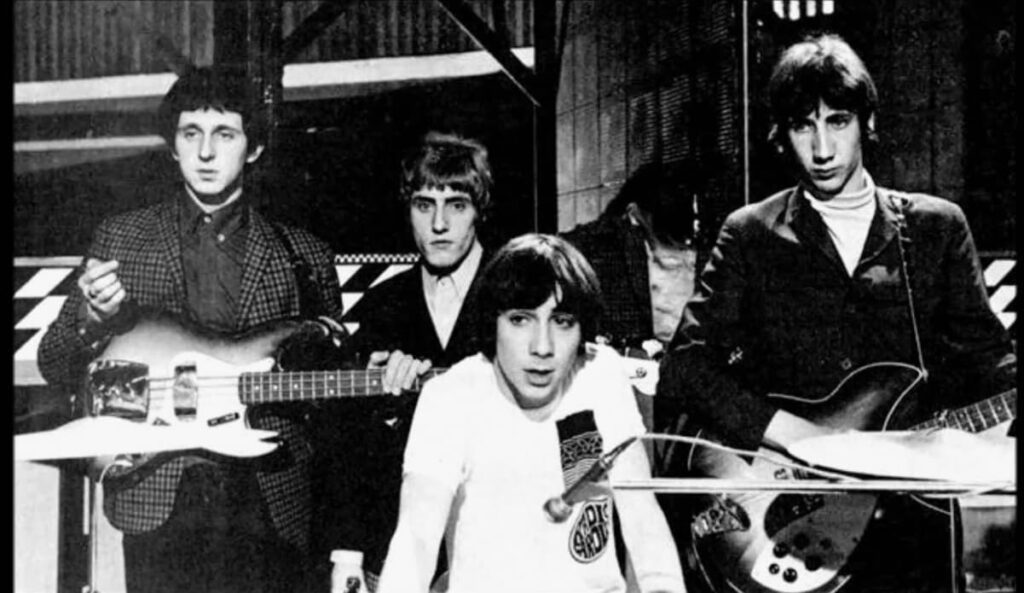
When Speed and Precision Defined The Who’s Sound
In 1966, The Who were still in the early phase of their rise, yet performances like Substitute live in France reveal a group already pushing the boundaries of rock music. Written by Pete Townshend, the song was released in March 1966 and quickly became one of the band’s defining singles, reaching number five on the UK charts. Its sharp lyrics and energetic structure captured the restless identity that would come to define much of the band’s work.
The live footage from France offers a clear look at The Who before the excesses of later years began to affect their performances. Roger Daltrey delivers the vocal with directness and control, while Townshend’s guitar work provides both rhythm and aggression. The interplay between instruments is tight, yet there is already a visible tension that would later evolve into the band’s more chaotic stage presence.
A particularly striking element of this performance is Keith Moon. At this stage in his career, Moon’s drumming combines speed, volume, and physical intensity in a way that few drummers had demonstrated before. His movements are fast and athletic, and his playing style emphasizes continuous motion rather than traditional timekeeping. Observers have often noted that his approach placed unusual demands on drum equipment, contributing to the need for more durable stands and hardware in live performance settings.
At the same time, John Entwistle provides a contrasting presence. His bass lines remain steady and controlled, anchoring the performance while allowing the rest of the band greater freedom. This balance between stability and volatility became a defining feature of The Who’s sound.
Substitute would later be included in the 1971 compilation album Meaty Beaty Big and Bouncy, further cementing its place in the band’s catalog. Decades later, the song continues to receive recognition, including a ranking within the top 200 songs of the 1960s by Pitchfork in 2006.
The 1966 performance stands as a valuable historical record. It captures The Who at a moment when their energy was focused and controlled, yet already hinting at the intensity that would soon define their legacy in rock history.