
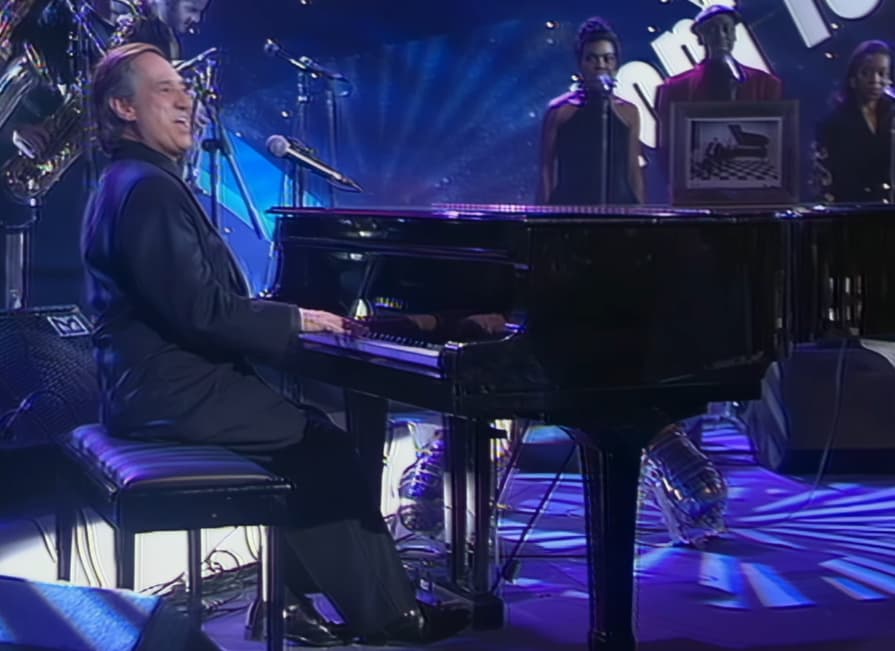
Neil Sedaka and Jools Holland Bring Infectious Energy to a Memorable 1994 Performance of I Go Ape
A lively television appearance from April 16, 1994 continues to delight music fans as Neil Sedaka and Jools Holland perform I Go Ape on Don’t Forget Your Toothbrush. The performance captures two accomplished musicians sharing the stage with enthusiasm, technical skill, and a clear enjoyment of live entertainment.
Originally written during the early years of Sedaka’s career, I Go Ape reflects the playful spirit of classic rock and roll and pop music. In this 1994 rendition, the song gains fresh energy through the collaboration with Jools Holland, whose piano playing complements Sedaka’s distinctive vocals and stage presence.
Viewers who revisit the clip often comment on the remarkable musicianship displayed throughout the performance. Some have expressed amazement at how both performers appear to navigate demanding piano passages with confidence and ease while remaining fully engaged with the audience. Their coordination and experience create a performance that feels both polished and spontaneous.
Audience memories have also become part of the clip’s enduring appeal. One fan recalled being seated in the front row during the recording and expressed delight at later discovering themselves in the footage shared on Neil Sedaka’s official YouTube channel. For that viewer, the video serves not only as a record of a musical event but also as a cherished personal memory connected to an artist they admired.
The performance demonstrates why Neil Sedaka has maintained a loyal following across generations. Known for his songwriting, piano playing, and vocal style, he has continued to attract listeners who appreciate melodies rooted in craftsmanship and timeless entertainment. His collaboration with Jools Holland highlights the mutual respect between experienced performers who understand how to engage a live audience through both technical ability and genuine enjoyment.
Many online comments focus on the positive atmosphere surrounding the performance. Rather than relying on elaborate production or visual effects, the presentation emphasizes musicianship, humor, and the chemistry between the artists. This straightforward approach has helped the recording remain enjoyable for viewers decades after it first aired.
As interest in archival performances continues to grow, clips such as this offer valuable insight into the enduring appeal of live television music programs from the nineteen nineties. The performance of I Go Ape stands as an entertaining reminder that memorable collaborations often arise when talented musicians share a stage with confidence, experience, and a clear passion for performing. For longtime fans and new listeners alike, the recording remains an engaging celebration of classic pop music and live performance.