
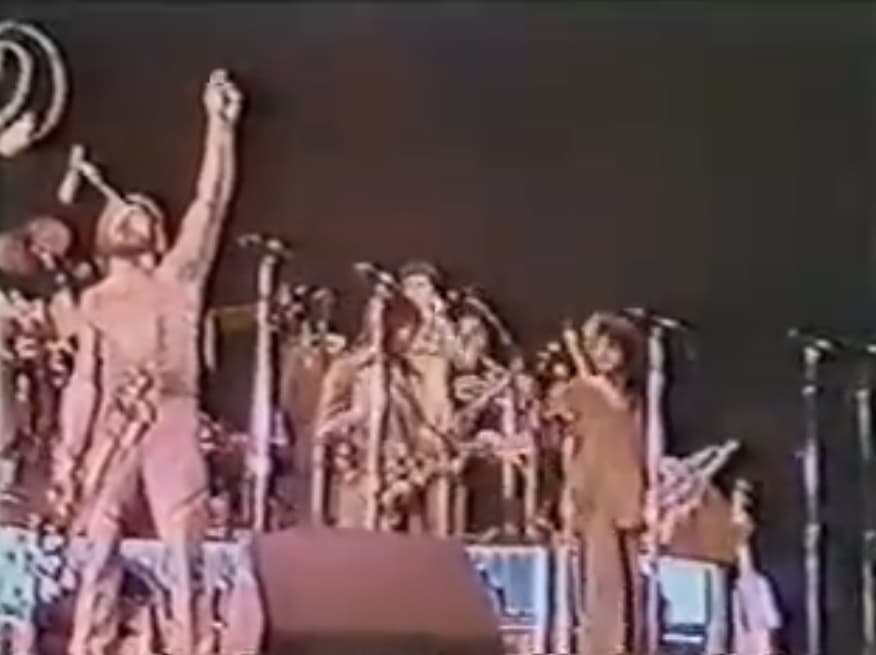
A Flash of Fire Before the Shift: Chicago’s “Anyway You Want” Ignites Grugahalle 1977
A commanding performance from 1977 captures Chicago at a moment when power, precision, and personality converged on stage. Filmed at Grugahalle, “Anyway You Want” reveals a band still rooted in rock energy, even as the currents of change were beginning to shape its future direction. For many viewers today, the footage offers a striking contrast to the smoother sound that would later define the group’s mainstream identity.
The performance draws heavily on the chemistry of its classic lineup, particularly the interplay between Peter Cetera and Terry Kath. Cetera’s vocal delivery stands out immediately. His ability to reach and sustain high notes with clarity and control adds a dramatic edge to the song, giving it both urgency and lift. It is a reminder of how central his voice was to the band’s evolving sound, bridging melodic accessibility with raw intensity.
Alongside him, Kath’s guitar work injects a different kind of energy. His playing carries a blues influenced grit that grounds the performance, preventing it from drifting into polish. Each phrase feels deliberate yet instinctive, balancing technical command with emotional weight. In moments where the arrangement opens up, his presence becomes especially pronounced, reinforcing the band’s rock credentials in a way that later eras would rarely replicate.
What elevates this rendition further is the continued strength of the horn section. Even within a more straightforward rock framework, the brass lines provide texture and identity, ensuring that the performance remains unmistakably Chicago. This integration of horns and rhythm section creates a layered sound that feels both expansive and tightly controlled, a hallmark of the band at its peak.
The setting contributes its own character. Performing before a European audience, the band encounters a crowd that listens as intently as it responds. This dynamic allows the music to unfold with clarity, highlighting the precision of each transition and the cohesion of the ensemble. It is not spectacle that defines the moment, but execution.
In retrospect, the concert holds added significance. It represents a period just before major shifts would reshape the group’s trajectory. For longtime listeners, it evokes a sense of what was and what might have been. For newer audiences, it offers a revelation, a glimpse of a band capable of far more than its later reputation might suggest.
“Anyway You Want” in this setting becomes more than a live performance. It stands as evidence of a band in full command of its abilities, delivering a sound that is both immediate and enduring.