
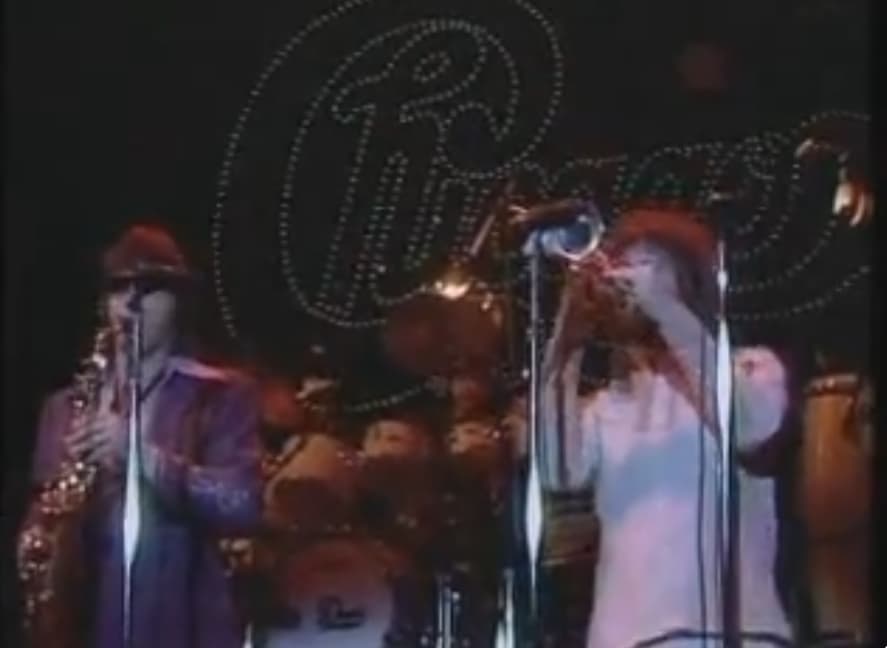
Rhythm Speaks Without Words: Chicago’s “Mongonucleosis” Captivates Amsterdam 1977
In 1977, an electrifying performance in Amsterdam revealed a side of Chicago that casual listeners might not expect. Known widely for their chart friendly hits, the band stepped onto a European stage and delivered “Mongonucleosis,” an instrumental composition that showcased their depth as musicians and their commitment to musical exploration. Filmed during a period when the group was still deeply connected to its jazz influenced roots, the performance stands today as a compelling reminder of their artistic range.
Written by trombonist Jimmy Pankow, “Mongonucleosis” first appeared on the album Chicago VII, a record that leaned heavily into jazz and fusion elements. Bringing such a complex piece to a live audience required not only technical skill but also cohesion, and Chicago delivered both with remarkable precision. The absence of vocals placed full responsibility on the instrumentation, transforming the performance into a dialogue between rhythm, brass, and improvisation.
What distinguishes this live rendition is its balance between structure and spontaneity. The Latin infused rhythms provide a steady foundation, while the horn section introduces layered melodies that shift and evolve. Each musician contributes to a larger sonic architecture, creating a sense of movement that feels both controlled and alive. Rather than overwhelming the listener, the arrangement invites careful attention, rewarding those willing to engage with its detail.
The Amsterdam audience plays a subtle yet important role in shaping the atmosphere. Their attentive presence allows the music to unfold without distraction, offering a contrast to more exuberant concert environments. This setting enhances the performance, emphasizing its musical complexity over spectacle. It becomes less about visual energy and more about sound, texture, and interaction.
Viewed within the broader context of the band’s career, this moment captures a transitional phase. By the late 1970s, Chicago would increasingly move toward a more accessible pop oriented direction. “Mongonucleosis,” however, reflects an earlier identity, one rooted in experimentation and instrumental mastery. It stands as a document of a time when the band prioritized exploration, blending rock with jazz and Latin influences in ways that challenged conventional expectations.
Today, the performance invites renewed appreciation and debate. It raises questions about the place of instrumental music in popular culture and whether such compositions can maintain audience engagement without lyrical guidance. In this case, the answer is evident. Through precision, creativity, and a shared musical vision, Chicago demonstrates that a song does not need words to leave a lasting impression.