
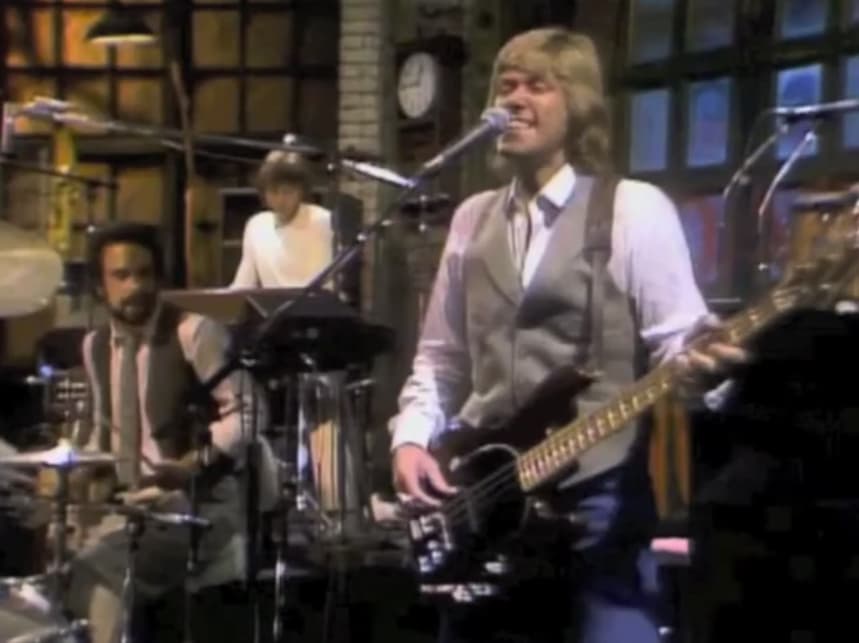
Funk, Fire, and Transition: Chicago’s “Street Player” Ignites Saturday Night Live in 1979
On November 3, 1979, Chicago stepped onto the Saturday Night Live stage and delivered a performance that continues to reshape how many listeners understand the band’s legacy. “Street Player,” presented in a high energy live setting, stands in sharp contrast to the softer material that would later dominate their commercial image. What emerges is a band still deeply rooted in groove, experimentation, and instrumental interplay.
The performance arrives at a pivotal moment. Chicago had already achieved major success throughout the 1970s, yet the direction of the coming decade remained uncertain. On this stage in New York City, they sound focused and driven, leaning into a funk influenced arrangement that highlights rhythm as much as melody. The result is a track that feels expansive and tightly controlled at the same time.
Peter Cetera’s presence is particularly notable. Known to many for his later ballads, he appears here in a different light. His bass playing is assertive and central to the performance, locking in with drummer Danny Seraphine to create a foundation that drives the entire arrangement forward. Vocally, he is in strong form, but it is his instrumental contribution that stands out most clearly in this context.
Donnie Dacus, in what would become one of his final appearances with the band, adds another layer of interest. His guitar work brings a sharper edge to the sound, complementing the brass section rather than competing with it. Observers have often pointed to his stage presence during this period, noting how his style fit naturally within the band’s evolving identity, even if his tenure proved brief.
The horn section remains a defining force. Rather than serving as background texture, the brass lines actively shape the structure of “Street Player.” They move in and out of the rhythm with precision, reinforcing the song’s dynamic shifts and giving it a distinctive character that sets it apart from standard rock arrangements.
This performance has also gained attention in later years due to its connection to other musical developments. Elements of “Street Player” would eventually be sampled in dance music, introducing the track to a new generation of listeners who may not have been familiar with Chicago’s earlier work. That afterlife underscores the song’s rhythmic strength and adaptability.
Despite limitations in officially available footage, the audio and surviving clips continue to circulate, sustaining interest in what many consider a standout moment. For some fans, it challenges preconceived notions about the band, revealing a side that is more rhythm driven and experimental than widely recognized.
More than four decades later, this appearance remains a compelling document of Chicago at a crossroads. It captures a band balancing past achievements with future possibilities, delivering a performance that still resonates with energy, precision, and purpose.