
A Song Caught Between Breath and Silence
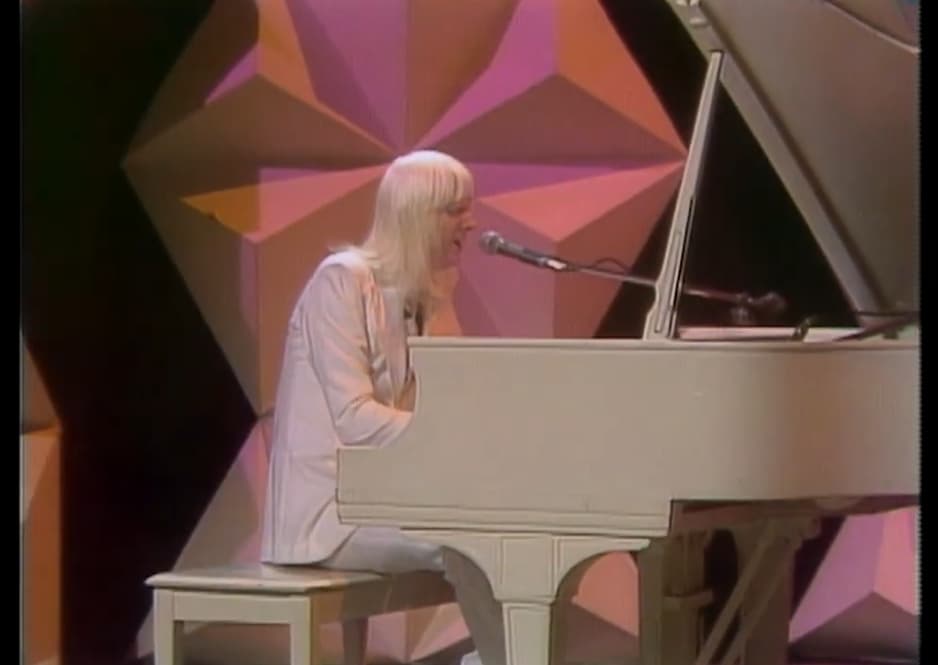
On November 2, 1973, under the studio lights of The Midnight Special, Edgar Winter delivered a performance of “Dying to Live” that revealed a quieter and more introspective side of his artistry. Known for the explosive success of instrumental pieces that would soon dominate the charts, this moment instead turned inward, offering something more fragile and deeply human.
The song unfolds with a sense of restraint that immediately sets it apart. Built around a foundation of piano and organ, the arrangement creates an atmosphere that feels suspended in time. There is no urgency to impress, no attempt to overwhelm. Instead, the music allows space for reflection, drawing the listener into a narrative that is as emotional as it is understated.
At the center of the performance is Winter’s vocal delivery, which leans toward soul rather than rock. His voice carries a natural vulnerability, shaping each phrase with care. Rather than relying on technical display, he communicates through subtle shifts in tone and timing. This approach transforms the song into something that feels less like a performance and more like a confession.
The context of the era adds another dimension to the moment. The early seventies were a period of experimentation, where artists freely blended genres and challenged expectations. In this setting, “Dying to Live” stands as an example of that creative freedom. It bridges elements of rock, soul, and gospel without settling into a single category, reflecting a broader musical landscape that valued exploration.
The televised format contributes to the intimacy of the performance. Without the scale of a large concert venue, every detail becomes more immediate. The interaction between musicians remains focused and precise, allowing the emotional core of the song to remain undisturbed. This clarity highlights the strength of the composition, proving that complexity is not always necessary for impact.
What gives this performance lasting significance is its contrast with what would follow in Winter’s career. While later works would emphasize rhythm and instrumental innovation, this moment captures a different priority. It places emotion at the forefront, reminding audiences of the depth that can exist within simplicity.
Viewed today, “Dying to Live” remains a powerful example of how music can articulate the tension between vulnerability and strength. It does not resolve that tension. Instead, it preserves it, allowing the listener to sit within it and understand its weight.