
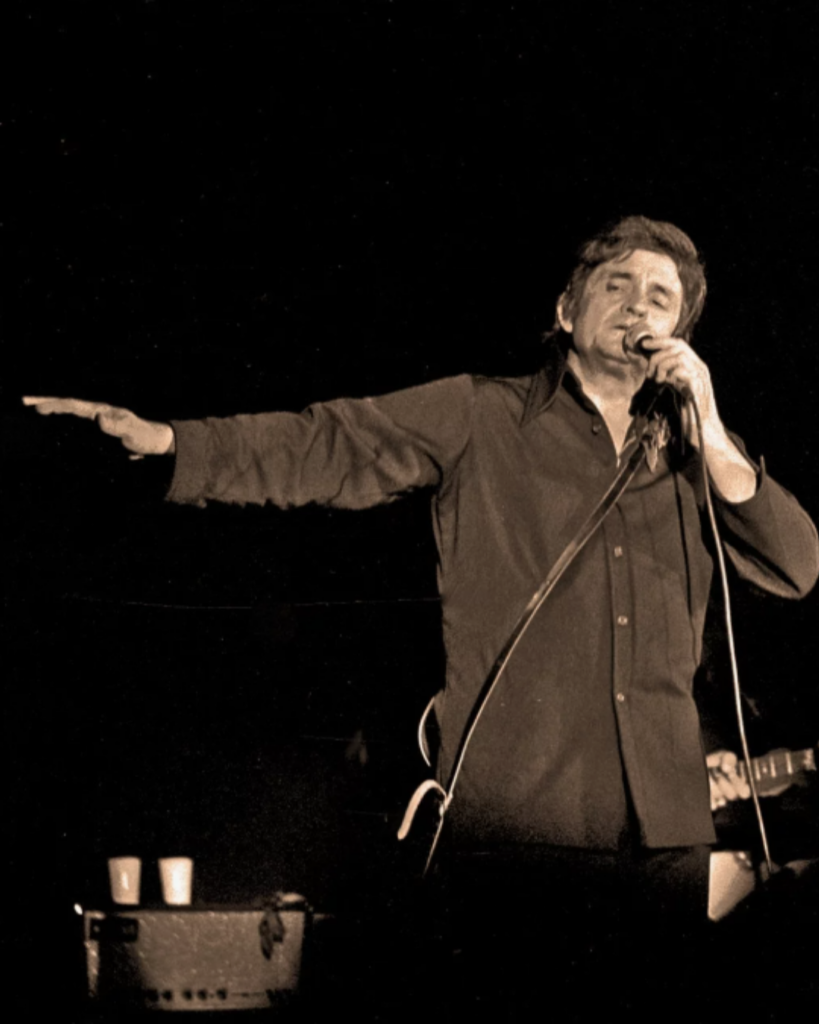
A Concert Behind Bars That Changed Country Music Forever Johnny Cash Folsom Prison 1968
In 1968, Johnny Cash stepped onto one of the most unusual stages in music history. Instead of a concert hall or television studio, he performed inside Folsom Prison in California, standing face to face with inmates who lived the reality his songs often described. Among the most powerful moments of that performance was his rendition of Give My Love to Rose, a song that carries a quiet but devastating emotional weight.
Unlike traditional concerts designed for entertainment, this performance felt closer to a shared human experience. Cash did not perform to impress a distant audience. He sang directly to people who understood loss, regret, and the passage of time in a deeply personal way. The atmosphere inside the prison created an intensity that no studio recording could replicate.
Give My Love to Rose tells the story of a man who, after years of incarceration, is finally released only to find himself dying before he can return home. His final act is not one of rebellion or regret, but of love. He asks a stranger to deliver a message and a small amount of money to his wife Rose. It is a simple request, yet it carries the emotional weight of an entire life interrupted.
What makes the Folsom Prison performance especially significant is the authenticity of the environment. The reactions from the inmates were immediate and genuine. Applause, cheers, and moments of silence blended into a shared recognition of the story being told. It was not just a performance of music. It was a reflection of lives shaped by similar struggles.
At the time, Cash himself was also navigating a complex period in his personal life and career. His voice during this era carried both strength and fragility, as if shaped by experience rather than technique. That contrast made the performance even more compelling. He was not presenting a perfect image of a performer, but a human being expressing stories that felt lived rather than imagined.
The Folsom Prison recording later became one of the most important live albums in country music history. It helped redefine Cash’s career and reshaped how live music could connect with real human experience. More importantly, it gave voice to people who were often forgotten by mainstream culture.
Today, the performance remains a powerful reminder that music is not only about sound. It is about truth, connection, and the ability to speak to people exactly where they are, even behind prison walls.