
A Concert Without Distance How Johnny Cash Redefined Truth in Music at Folsom Prison
In 1968, Johnny Cash stepped into Folsom State Prison in California and delivered one of the most iconic live recordings in music history. Among the most striking performances of that day was Cocaine Blues, a song that captured the raw intersection of humor, crime, and reality inside a prison audience.
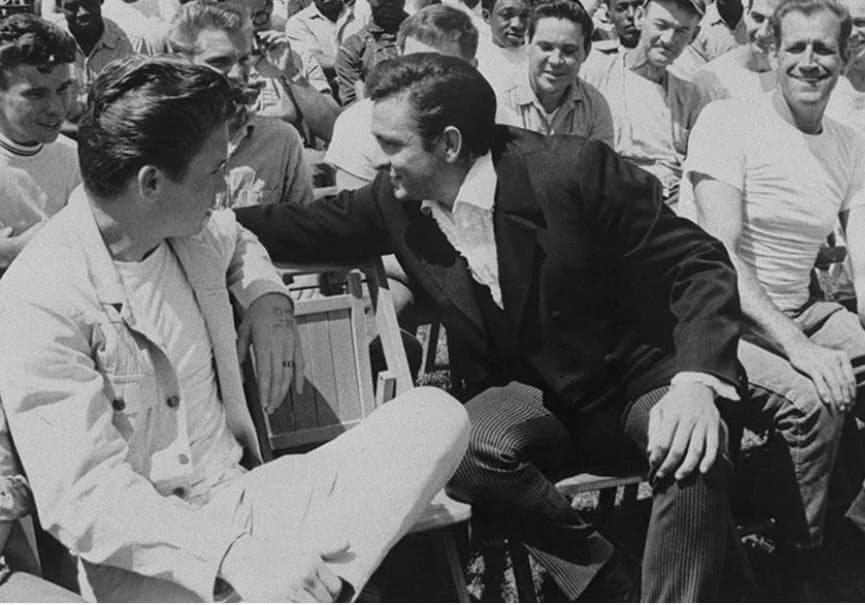
Unlike conventional concerts, this performance did not take place in front of distant fans or a polished stage environment. Instead, Cash stood only a few feet away from inmates who were living the consequences of the very world he was singing about. The atmosphere was immediate, unfiltered, and charged with emotional authenticity. Every sound, reaction, and moment carried the weight of shared human experience.
Cocaine Blues itself tells the story of a man caught in a spiral of drugs, violence, and downfall. While the subject matter is dark, Cash delivers it with a storytelling tone that mixes seriousness with unexpected humor. This contrast created a unique reaction inside the prison. The audience responded not with silence, but with laughter, shouting, and recognition. It was not mockery. It was understanding.
One of the most significant aspects of this performance is how natural and unpolished it feels. There is no separation between performer and audience. Cash occasionally adjusts his delivery, reacts to the room, and moves with the energy of the inmates rather than controlling it from above. This dynamic transformed the song from a simple performance into a shared narrative.
At the time of the recording, Cash was also undergoing a major turning point in his career. His connection to marginalized communities and his willingness to perform in prisons had already shaped his public image. However, Folsom Prison marked a defining moment where that identity became fully realized. He was no longer simply a country music star. He became a voice for people often ignored by mainstream society.
The humor embedded in Cocaine Blues plays a critical role in its impact. It is not humor for entertainment alone, but humor rooted in lived reality. It reflects mistakes, consequences, and the strange ways people cope with their own histories. This duality is what continues to draw audiences to the recording decades later.
Today, the Folsom Prison performance is remembered not only as a musical milestone, but as a moment where music broke through social barriers. It demonstrated that storytelling in song can exist beyond entertainment, becoming a form of truth shared between those who sing and those who listen.