
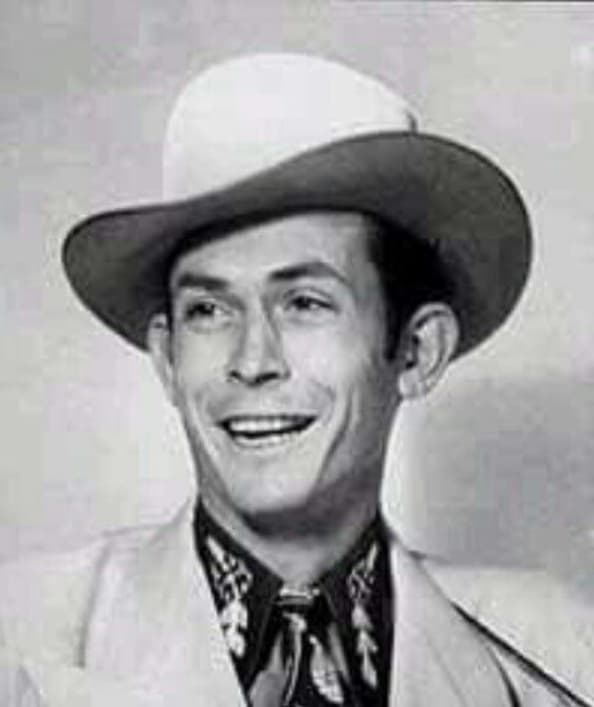
Before the Legend, There Was a Voice on the Air: A 1949 Recording That Quietly Defined Hank Williams
A surviving 1949 broadcast from the Health and Happiness radio program in Nashville offers a rare and intimate glimpse into the early rise of Hank Williams. In this recording, his rendition of Lost Highway stands not merely as a performance, but as a moment suspended between anonymity and immortality.
Unlike the grand stages that would later define country music, this setting is remarkably restrained. Designed for radio rather than spectacle, the session places the listener inside a modest studio environment where every note feels immediate and unfiltered. Williams is accompanied by his band, the Drifting Cowboys, yet nothing distracts from the clarity of his voice. There is no theatrical buildup, no calculated drama. The song begins almost as if it has always been there, waiting to be heard.
Originally written by Leon Payne, Lost Highway tells the story of a man who has strayed too far to return. In Williams’ hands, the narrative takes on a deeper resonance. His vocal delivery carries a striking balance between control and vulnerability. Each phrase feels deliberate, yet there is an undercurrent of tension that suggests something unresolved beneath the surface.
What makes this recording especially compelling is its place in time. In 1949, Williams was on the brink of national recognition, not yet a fully formed legend but no longer an unknown voice. The radio broadcasts of this period played a crucial role in shaping his public identity, allowing audiences across regions to encounter his music in its most authentic form. These sessions, preserved against the odds, now function as cultural artifacts from a formative era of American country music.
There is also a haunting layer of hindsight. Lost Highway speaks of misdirection, regret, and a life drifting beyond control. Though Williams did not write the song, his interpretation feels uncannily personal. Listeners today cannot ignore the parallels between the narrative and the trajectory his own life would take in the years that followed. The performance does not announce this connection, yet it lingers quietly in every line.
For contemporary audiences, the recording offers more than nostalgia. It provides a direct encounter with an artist before the machinery of fame fully took hold. In its simplicity lies its power. No embellishment, no illusion. Just a voice, a song, and a moment that would echo far beyond the walls of a Nashville studio.