
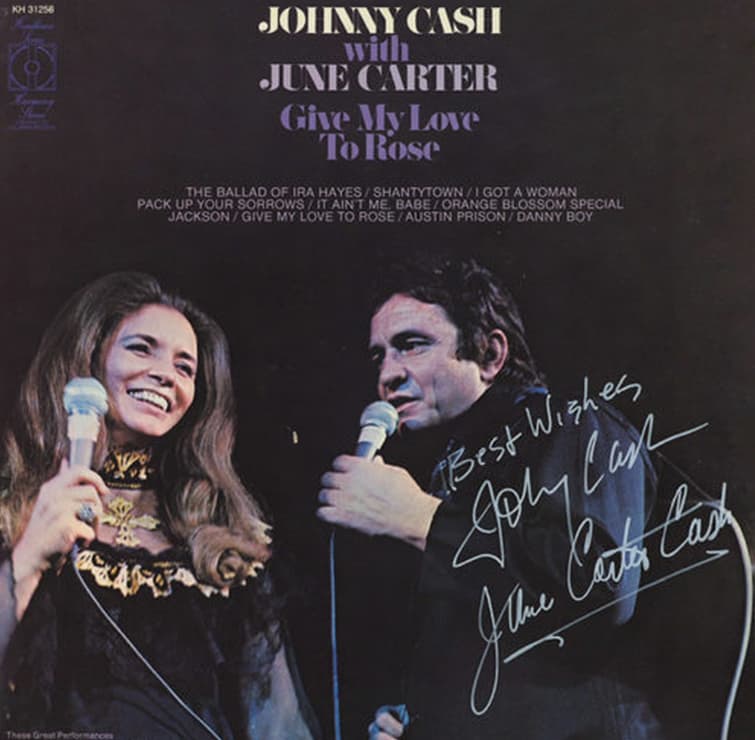
Johnny Cash Gave New Life To Give My Love To Rose With A Performance Filled With Heartbreak
Few songs in Johnny Cash’s remarkable catalog capture the pain of lost hope as powerfully as Give My Love To Rose. Although Cash first recorded the song in 1957, his later version revealed a deeper emotional weight that many listeners consider one of the finest performances of his career. With age, experience, and a voice marked by decades of triumph and hardship, Cash transformed an already moving story into a timeless reflection on love, regret, and compassion.
The song tells the tragic story of a man who has been released from prison and dreams of returning home to his wife, Rose, and their young son. Before he can complete the journey, he collapses and dies. In his final moments, he asks a stranger to deliver his personal belongings to his family and to tell them that he never stopped loving them. The simple narrative carries extraordinary emotional power, making it one of Cash’s most memorable story songs.
Many longtime fans have pointed out the striking difference between the original 1957 recording and the later interpretation. The first version featured a brighter rhythm that reflected the rock and roll influence of the era, despite the heartbreaking subject matter. By contrast, the later recording adopts a slower and more somber approach. Every lyric is given room to breathe, allowing the sorrow of the prisoner’s final journey to unfold with remarkable honesty.
Listeners continue to describe the performance as one of the most emotional recordings Cash ever made. Many say it is among the very few songs capable of bringing them to tears. Rather than relying on dramatic production, the recording draws its strength from Cash’s unmistakable voice, which conveys empathy for the lonely prisoner with extraordinary sincerity. His delivery makes the listener feel the man’s longing to see his family one last time, even though that reunion never comes.
The song has also inspired discussion about its place among Johnny Cash’s prison songs. While it does not take place behind prison walls, many fans argue that it belongs in that tradition because the central character remains emotionally imprisoned by the consequences of his past. Freedom arrives too late, and the dream of returning home is tragically cut short.
More than half a century after it was first written, Give My Love To Rose remains one of the clearest examples of Johnny Cash’s unmatched gift for storytelling. His later recording does more than retell a sad tale. It invites listeners to reflect on forgiveness, redemption, and the enduring bonds of family. That emotional honesty continues to resonate with audiences around the world, confirming why Johnny Cash remains one of the greatest interpreters of narrative songs in American music history.