
A Night Without Applause, A Story That Refused to End
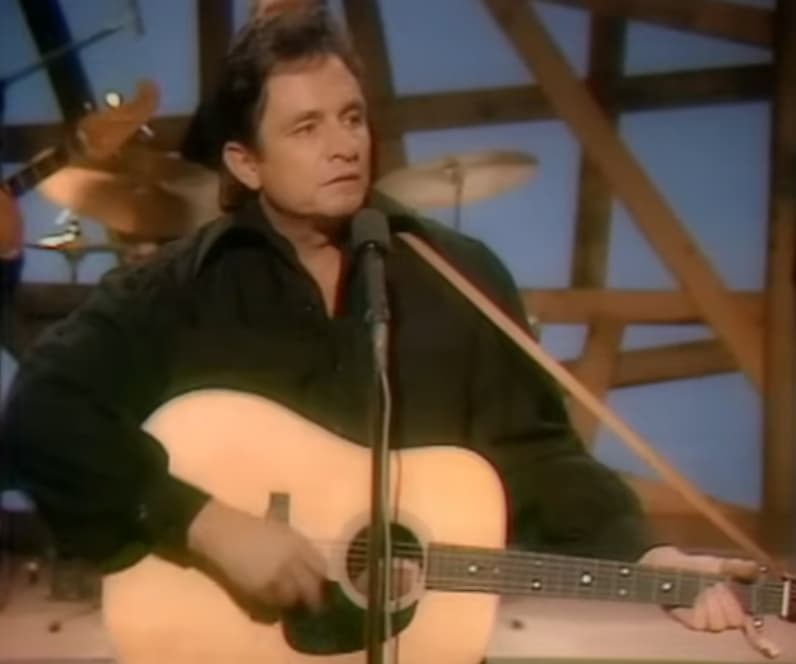
In 1971, during a televised session in Copenhagen, Johnny Cash delivered a version of “Me and Bobby McGee” that continues to stand apart from every other interpretation. There were no roaring crowds, no dramatic build up, and no theatrical gestures. What unfolded instead was something far more controlled and quietly disarming.
Originally written by Kris Kristofferson and immortalized by Janis Joplin, the song had already carried emotional weight by the early seventies. Joplin’s posthumous success had turned it into a cultural landmark tied to loss, freedom, and the fragile edge of fame. Cash stepped into that space not to compete, but to reinterpret.
The Denmark performance is notable for its atmosphere. Unlike his famous prison concerts, this setting was intimate, almost restrained. The audience did not interrupt with cheers. Instead, they listened. That silence became a defining feature of the recording, allowing every lyric to land with unusual clarity. Cash did not push his voice toward dramatic peaks. He held it steady, grounded, and deliberate, as if the story being told required no embellishment.
This approach transformed the meaning of the song. The famous line about freedom did not feel triumphant. In Cash’s delivery, it carried a sense of cost. Freedom was no longer romanticized. It sounded like something earned through loss, or perhaps something discovered too late. The performance suggested a deeper reading, one shaped by Cash’s own life experiences and struggles.
There is also a subtle historical resonance. The early seventies were marked by cultural shifts and questions about identity, war, and personal liberation. Within that context, the song’s themes expanded beyond a personal narrative. It began to echo a broader generational uncertainty. Cash, already an established figure, became a voice not just of country music, but of reflection.
Perhaps the most striking element comes at the end. There is no explosive finish, no attempt to heighten the moment. The song simply concludes, as if the story has reached its natural stopping point. That restraint is what gives the performance its lasting power.
In a career filled with iconic moments, this recording remains unique. It is not defined by spectacle, but by precision and emotional clarity. More than a cover, it stands as a quiet reinterpretation that reveals how a familiar song can carry entirely new meaning in the right hands.