
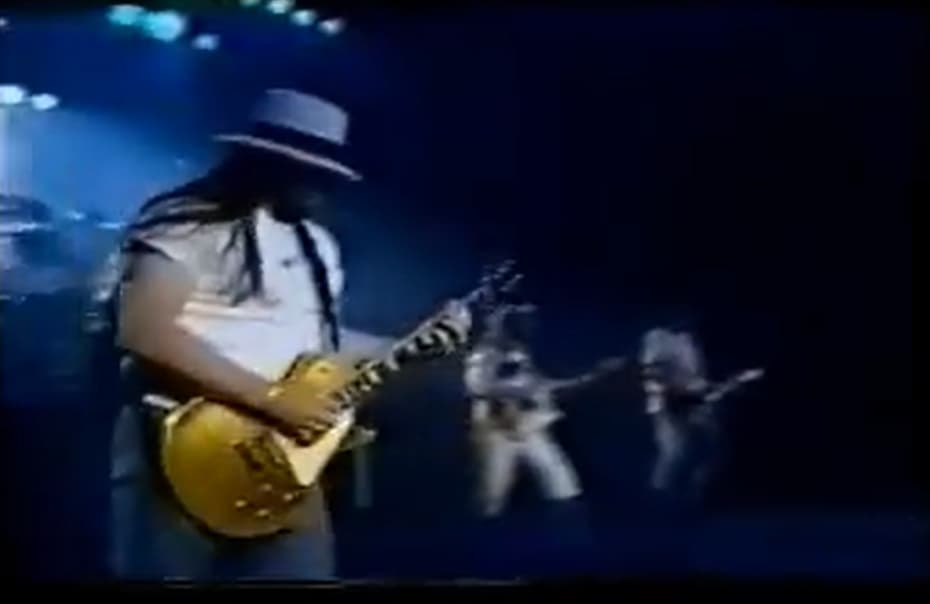
A Reunion Written in Sound Molly Hatchet Reclaim Their Identity on National Broadcast.
In 1983, a televised simulcast of Rock N’ Roll Tonite from Los Angeles delivered more than a routine opening number. Molly Hatchet stepped into the spotlight with “Bloody Reunion,” and in doing so presented a moment that felt as much like a declaration as a performance. The return of Danny Joe Brown to the microphone reshaped the band’s identity in real time, restoring a sound that many fans believed had been missing.
From the first bars, the intent is unmistakable. Brown’s vocal presence carries a raw authority that immediately reconnects the band to its Southern rock roots. His delivery does not merely revisit the past. It reasserts it. For listeners who had followed the group through earlier lineup changes, the difference is palpable, transforming the performance into a statement of continuity rather than reinvention.
Behind him, the instrumental force of the band operates with precision and weight. The combined guitar work of Dave Hlubek, Duane Roland, and Steve Holland forms a dense and driving framework that defines the group’s signature sound. This layered approach does not overwhelm the song. Instead, it creates a powerful backdrop that allows each element to contribute without losing clarity. The rhythm section, anchored by Riff West and Barry Borden, reinforces the structure with steady momentum.
The choice of “Bloody Reunion” as the opening piece carries symbolic weight. The title alone suggests a coming together marked by intensity and purpose, and within the context of this performance it takes on an almost autobiographical meaning. The band is not simply playing a song. It is marking a turning point, presenting itself once again in a form that aligns with its origins.
For audiences at the time, the broadcast offered a renewed sense of connection. For viewers today, it carries an added layer of reflection. Many of the musicians who defined this era have since passed, and their presence in this recording transforms it into more than documentation. It becomes a record of a moment when their collective energy was fully intact.
The performance also continues to inspire debate. Some listeners argue that Molly Hatchet’s identity is inseparable from Brown’s voice, while others point to the contributions of different lineups across the band’s history. There are broader questions as well, including whether Southern rock could have sustained greater prominence had such transitions been avoided.
What remains clear is the impact of this moment. “Bloody Reunion” stands as a convergence of timing, talent, and intention. In a single televised appearance, Molly Hatchet did more than open a show. They reaffirmed who they were, and in doing so left a lasting impression that continues to resonate with those who return to it.