
A Farewell Unspoken: Patsy Cline’s Final Television Echo in “Leavin’ on Your Mind”
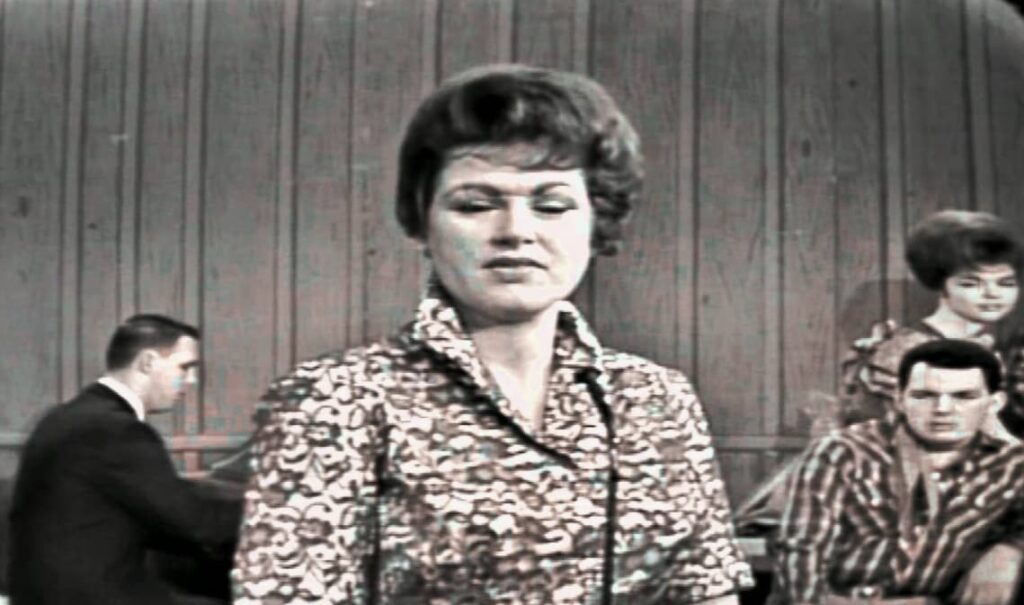
On February 18, 1963, a performance aired from Nashville would later take on a meaning far deeper than anyone present could have imagined. Broadcast on WSMV-TV as part of the Grand Ole Opry program, Patsy Cline delivered “Leavin’ on Your Mind” with a calm authority that now feels almost otherworldly. Within weeks, she would be gone, and this moment would stand among her final televised appearances.
The song itself carries a story shaped by chance and persistence. Originally recorded by another artist, it was not immediately offered to Cline. Producer Owen Bradley initially hesitated, curious to see how the earlier version might perform. Yet when Cline eventually recorded it, she transformed the material into something unmistakably her own. Her interpretation did not rely on dramatic flourishes. Instead, it drew its power from nuance, phrasing, and an emotional clarity that few voices could match.
At the time of its release in 1963, the single did not achieve the commercial heights of her earlier successes. It charted modestly, overshadowed by songs that had already defined her career. However, history has a way of revising first impressions. Over the years, “Leavin’ on Your Mind” has come to be recognized as a deeply expressive performance, one that reveals the full extent of Cline’s interpretive skill.
Watching the televised performance today introduces a layer of poignancy that was absent in its original broadcast. The lyrics speak of departure and emotional distance, themes common in country music. Yet in hindsight, they resonate with an unintended finality. There is no theatrical gesture to signal what is to come, only a composed artist delivering a song with quiet conviction. That restraint is precisely what makes the moment so affecting.
The visual presentation, originally captured in black and white and later enhanced through modern restoration, adds another dimension. The clarity of the image allows contemporary audiences to engage more directly with the performance, while also raising subtle questions about how historical material should be preserved. Whether viewed in its original form or through updated technology, the essence remains unchanged.
What endures most is the voice. Patsy Cline sings with a balance of strength and vulnerability that continues to define her legacy. This performance does not seek to overwhelm. It invites reflection. It reminds listeners that greatness often resides in understatement.
In the end, this moment stands as more than a television appearance. It is a document of an artist at the height of her expressive power, captured just before an untimely loss. “Leavin’ on Your Mind” may not have been her biggest hit, but in this setting, it becomes something far more enduring. It becomes a quiet farewell that no one knew they were hearing at the time.