
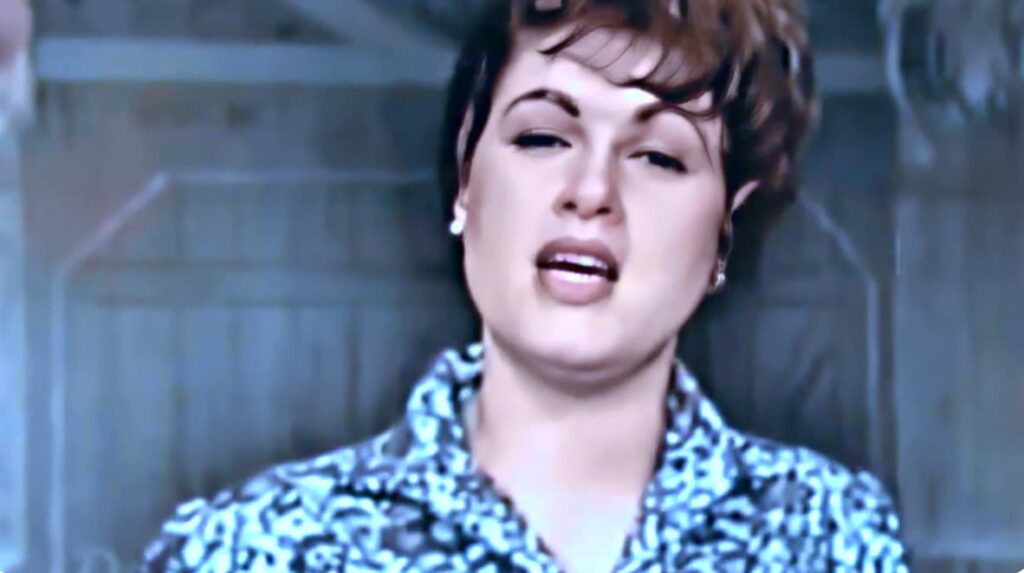
From Texas Dancehall to Timeless Ballad: Patsy Cline Reimagines “San Antonio Rose”
Few recordings illustrate the transformative power of interpretation as clearly as “San Antonio Rose” in the hands of Patsy Cline. Originally introduced as a lively western swing instrumental by Bob Wills, the song had long been associated with dance halls, rhythm, and regional tradition. By the time Cline recorded her version in August 1961, its identity had shifted dramatically, evolving into something more intimate and emotionally reflective.
Produced by Owen Bradley, the recording stands as a defining example of the Nashville Sound at its most refined. This approach sought to broaden country music’s appeal by blending traditional elements with polished arrangements, often incorporating strings, background vocals, and smooth instrumental textures. In this context, “San Antonio Rose” becomes less a communal celebration and more a personal reflection, guided by Cline’s controlled and deeply expressive vocal delivery.
Supporting her is an extraordinary ensemble of session musicians, including The Jordanaires, whose harmonies provide a soft and unobtrusive backdrop. Their contribution allows the focus to remain firmly on Cline’s voice while enhancing the emotional depth of the performance. Instrumentalists such as Floyd Cramer and Hank Garland further shape the recording’s texture, adding subtle layers that elevate the song without overwhelming its core sentiment.
What distinguishes this version most clearly is its emotional tone. The lyrics, written from the perspective of a narrator recalling a lost love, are delivered with restraint rather than overt sorrow. Cline avoids dramatization, choosing instead to let nuance carry the weight of the narrative. Her phrasing is measured, each line unfolding with a natural flow that suggests reflection rather than performance. This subtlety allows listeners to engage with the song on a deeply personal level.
The timing of the recording adds an additional layer of significance. Coming shortly after a serious car accident that left Patsy Cline recovering from physical and emotional strain, the performance carries an unspoken sense of resilience. Without referencing her circumstances directly, the recording conveys a quiet strength that resonates throughout the track.
Over time, Cline’s interpretation has come to represent a bridge between musical eras. It connects the energetic roots of western swing with the smoother, more introspective qualities of early 1960s country pop. In doing so, it demonstrates how a song can evolve while retaining its emotional core.
Today, “San Antonio Rose” invites renewed discussion among listeners and historians alike. Which version best captures the spirit of the original composition. Does refinement enhance or diminish authenticity. In this recording, Patsy Cline offers a compelling answer, proving that reinterpretation, when guided by sincerity, can create something enduring and entirely its own.
 Oldies Songs