
When Restraint Becomes Applause Revisiting a Classic in Real Time
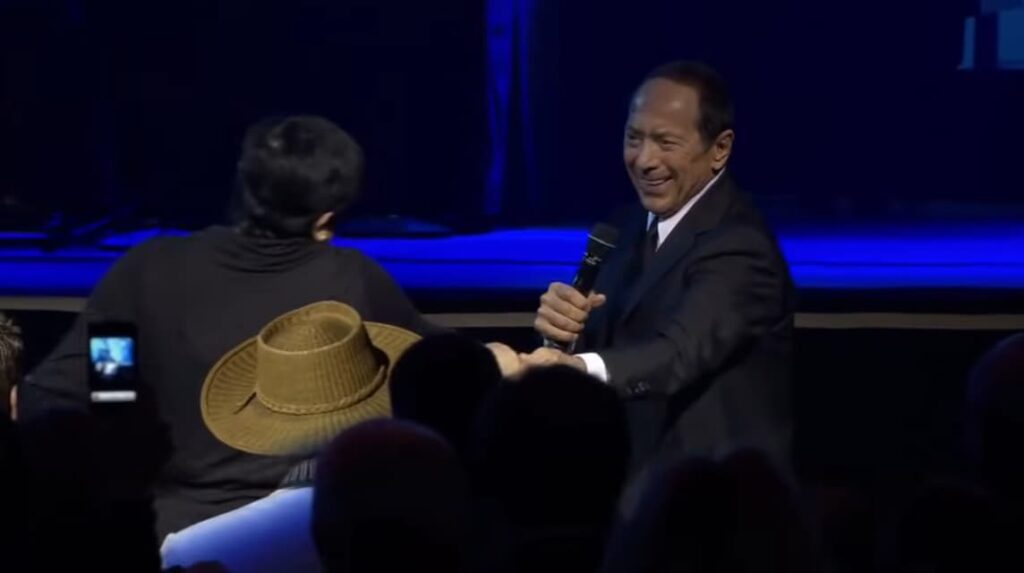
In a recent live performance of “Put Your Head On My Shoulder,” Paul Anka offers more than a return to a beloved song. He presents a study in contrast between eras, revealing how audience behavior can shape the meaning of a performance as much as the music itself. What unfolds is not defined by volume or spectacle, but by attention.
From the opening lines, the atmosphere is notably restrained. The audience remains quiet, focused, almost suspended in anticipation. For some viewers, this stillness appears disengaged, even disappointing. For others, it reflects a form of respect that has become increasingly rare. The divergence in interpretation has become one of the most compelling aspects of the clip, sparking debate about what audiences should bring to a live performance.
The song at the center of this moment carries its own legacy. First introduced in the late nineteen fifties, “Put Your Head On My Shoulder” has endured because of its simplicity and emotional clarity. It is not a composition that demands audience participation. Instead, it invites intimacy. In this context, the quiet becomes part of the arrangement, allowing Anka’s voice to remain the focal point.
A key moment arrives as the performance builds toward its familiar high note. Rather than cheering prematurely or singing along, the audience holds back. This collective pause creates tension, transforming a predictable musical cue into a shared experience. When the note is finally delivered, the release is subtle but effective, reinforcing the idea that engagement does not always need to be loud to be meaningful.
Anka’s stage presence further underscores this dynamic. He performs with the assurance of an artist who understands both his material and his audience. There is no attempt to force interaction or amplify reaction. Instead, he allows the song to unfold at its own pace, trusting that its impact will resonate without embellishment. This approach reflects a tradition rooted in the era of crooners, where clarity of voice and control of phrasing defined the performance.
The broader conversation surrounding the clip extends beyond a single song. It raises questions about how live music is experienced today. Modern audiences often express enthusiasm through constant movement and vocal participation, sometimes at the expense of the performance itself. In contrast, this setting suggests an alternative model, one where listening becomes an active and valued form of engagement.
Ultimately, the performance challenges assumptions about what constitutes energy in a live setting. It suggests that intensity can exist within stillness, and that a quiet audience may, in fact, be deeply connected. In revisiting a classic, Paul Anka not only reaffirms the strength of the song, but also invites a reconsideration of how music is heard and appreciated.
 Oldies Songs