
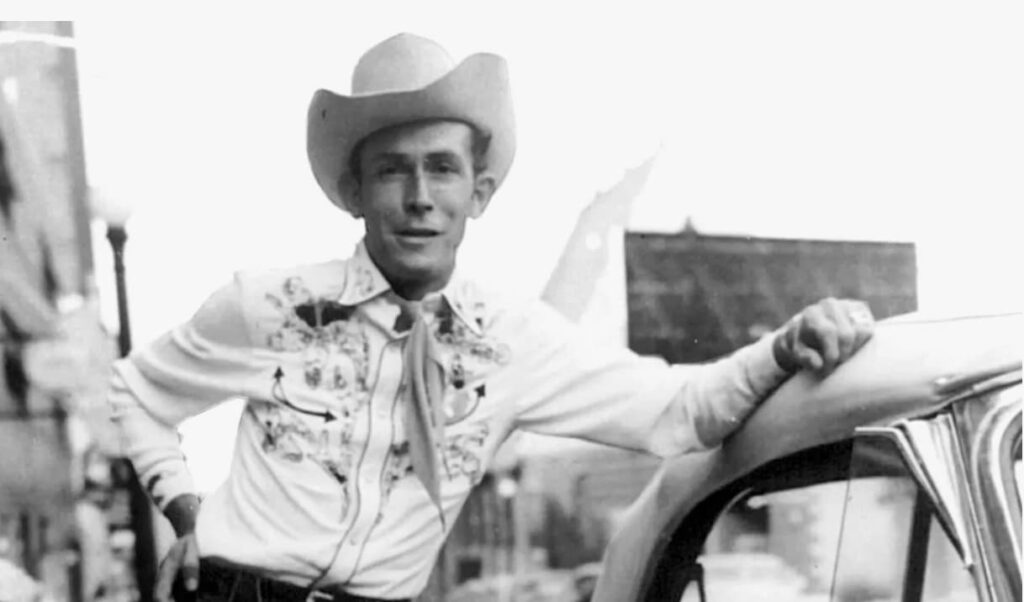
A Voice That Could Not Stay Still: The Quiet Power of “Ramblin’ Man” Resurfaces
A recently resurfaced clip of “Ramblin’ Man (Single Version)” has drawn renewed attention to a defining yet often overlooked moment in the legacy of Hank Williams. Originally recorded in 1951 and released through UMG Recordings Inc., the track offers more than a glimpse into his artistry. It reveals a deeper portrait of a man navigating the uneasy space between rising fame and personal unraveling.
Unlike the breakthrough success of his earlier hits, “Ramblin’ Man” did not dominate charts upon release. Instead, it endured quietly, gaining recognition over time as one of the most introspective recordings in his catalog. Notably, Williams chose to release the song under the name Luke the Drifter, a pseudonym he used for more reflective and narrative driven material. This decision alone suggests a deliberate separation between the public figure and the inner voice seeking expression.
The song itself is striking in its simplicity. Built on a minimal musical structure, it avoids dramatic shifts or elaborate arrangements. The melody moves steadily forward, mirroring the restless theme at its core. There is no sense of arrival, no resolution waiting at the end. This structural choice reinforces the emotional weight of the lyrics, which portray a man who does not leave by choice, but by nature. The journey is not an adventure. It is an inevitability.
What makes this recording particularly compelling today is how closely it aligns with the trajectory of Williams’s life. By 1951, he had already secured national recognition, yet signs of personal struggle were becoming increasingly visible. In hindsight, “Ramblin’ Man” reads less like fiction and more like quiet confession. The idea of constant movement without belonging reflects a deeper instability that would soon define his final years.
There is also a broader cultural resonance at play. The imagery of roads, trains, and distance has long symbolized freedom in American music. In this recording, however, those same images take on a different meaning. Movement becomes a form of displacement, suggesting not liberation, but the absence of a place to return to.
As audiences revisit this track through modern platforms, its significance continues to evolve. It stands not as a headline moment, but as a subtle turning point. A recording that captures an artist not at his peak, but in transition. In that transition lies its lasting power.