
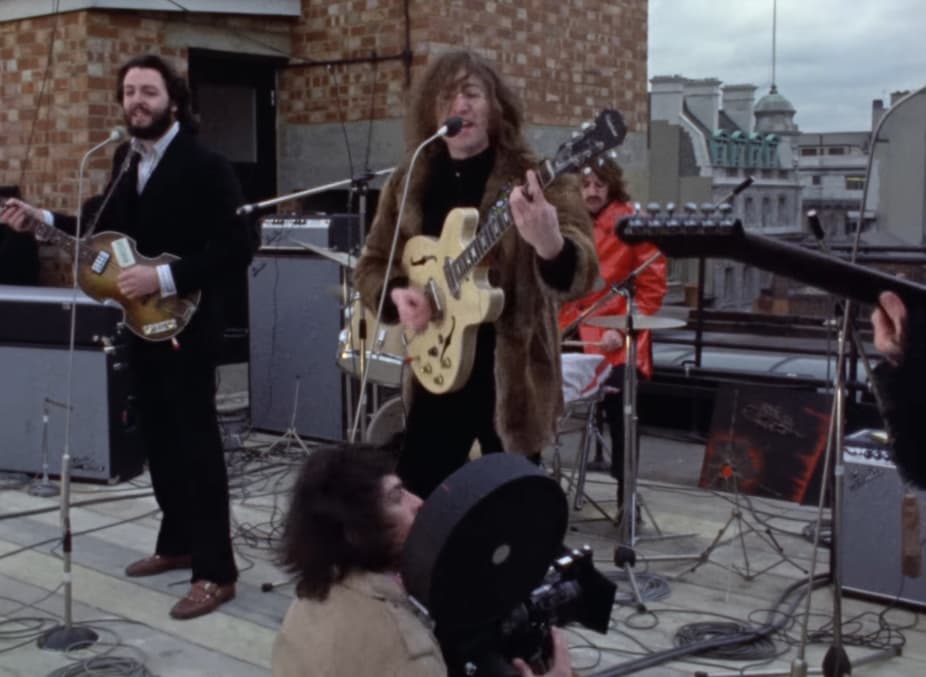
The Beatles’ Final Rooftop Performance of “Don’t Let Me Down”: A Historic Moment Frozen in Time
On January 30, 1969, The Beatles performed what would become their final live appearance together, an unannounced rooftop concert at Apple Corps headquarters in London. Among the songs performed that day was “Don’t Let Me Down,” a deeply emotional track written by John Lennon as a raw expression of love and vulnerability toward Yoko Ono.
The performance captured in the widely circulated rooftop footage has since become one of the most iconic moments in rock history. Unlike the studio version released as a single, this recording is drawn from the rooftop sessions later compiled in the Let It Be… Naked project, which combines the strongest takes from that day. The result preserves the immediacy and imperfections of a band performing live under unexpected public attention.
Lennon once explained the emotional core of the song in a 1970 interview with Rolling Stone, describing it as a direct, unfiltered plea for support in moments of emotional collapse. “When you’re drowning, you don’t say I would be incredibly pleased if someone would notice me drowning,” he said. “You just scream.” That sentiment is clearly reflected in the rooftop performance, where his vocal delivery is urgent and unguarded.
The rooftop session itself was part of the filming for the band’s Let It Be project, directed by Michael Lindsay Hogg. On that cold January afternoon, the band also performed “Get Back,” “I’ve Got a Feeling,” and other tracks, with “Don’t Let Me Down” flowing directly between the earlier and later takes. The performance was unplanned in the traditional sense, with no public announcement, yet it drew attention from people on the streets of London who suddenly realized they were witnessing music history unfolding above them.
What makes this moment even more significant is its historical context. It was not only a performance, but the final time the four members of the band played together in front of an audience. Shortly after, internal tensions and diverging creative paths would lead to the group’s breakup.
Today, the rooftop version of “Don’t Let Me Down” stands as a powerful reminder of both artistic unity and emotional fragility. The camera work, including sudden zooms and street reactions, adds to the sense of spontaneity. In hindsight, it captures not just a performance, but the closing chapter of an era that reshaped modern music forever.
 Oldies Songs