
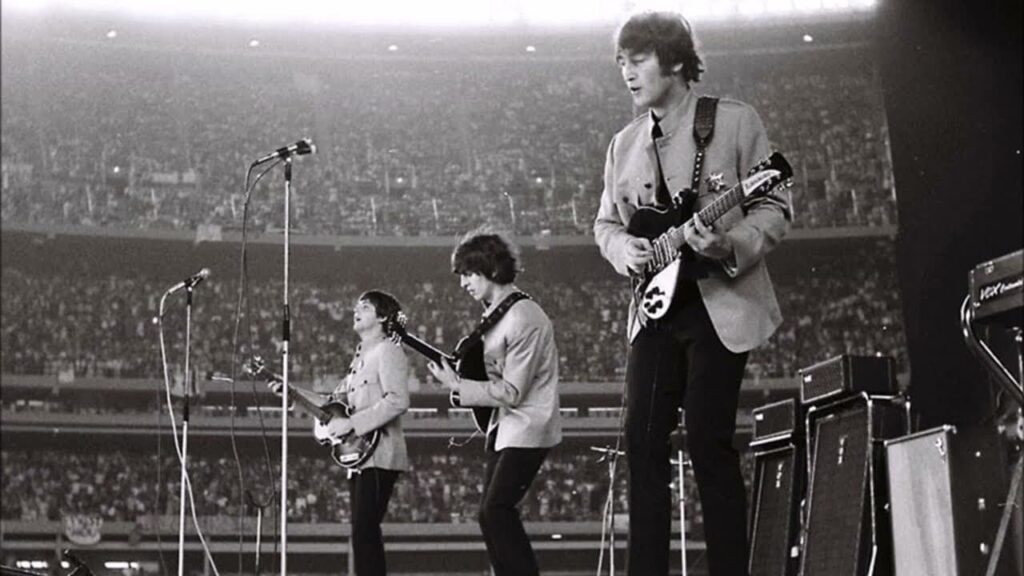
The Night Sound Was Drowned by History: The Beatles and the Birth of Stadium Rock at Shea
On August 15, 1965, The Beatles stepped onto the vast field of Shea Stadium and unknowingly redefined the scale of live music. Performing before more than fifty five thousand fans, they did not simply headline a concert. They inaugurated a new era where popular music would outgrow theaters and arenas and claim the enormity of stadiums.
The anticipation surrounding the event was unprecedented. Tickets, priced between four and five dollars, vanished within weeks, reflecting a demand that surpassed anything the music industry had previously encountered. By the time the band arrived, transported under tight security and extraordinary logistical planning, the atmosphere had already reached a fever pitch. What followed was not a conventional performance but a cultural eruption.
From the opening moments, the defining characteristic of the concert was not the music itself but the overwhelming reaction of the audience. The phenomenon known as Beatlemania reached its most intense expression that night. Waves of screaming rolled across the stadium, so powerful that even the band members struggled to hear their own instruments. Amplifiers, considered advanced at the time, proved inadequate against the sheer force of collective excitement. The result was a performance where sound became secondary to presence, and where witnessing the band carried more significance than hearing them clearly.
Yet within this chaos lay a profound shift in the relationship between artist and audience. Songs that had dominated radio airwaves transformed into symbols rather than sonic experiences. Each chord and lyric existed as a shared emotional signal between the performers and the crowd. The concert revealed both the possibilities and limitations of live performance on such a scale. It demonstrated how music could unite tens of thousands in a single moment, while also exposing the technological gaps that would shape the future of concert production.
The brevity of the set added to its intensity. In just over half an hour, the band delivered a rapid sequence of songs before exiting as swiftly as they had appeared. There was no extended encore, no elaborate conclusion. The experience felt fleeting, almost elusive, leaving behind an impression that was larger than its actual duration.
In retrospect, the Shea Stadium concert stands as a pivotal moment in modern music history. It invites ongoing debate about whether it should be remembered as a triumph of cultural impact or a compromised musical experience. What remains beyond question is its legacy. On that summer evening, The Beatles transformed a baseball stadium into a stage and, in doing so, changed the expectations of live performance forever.
 Oldies Songs