
Love Reign O’er Me and the Night That Defined a Band’s Legend
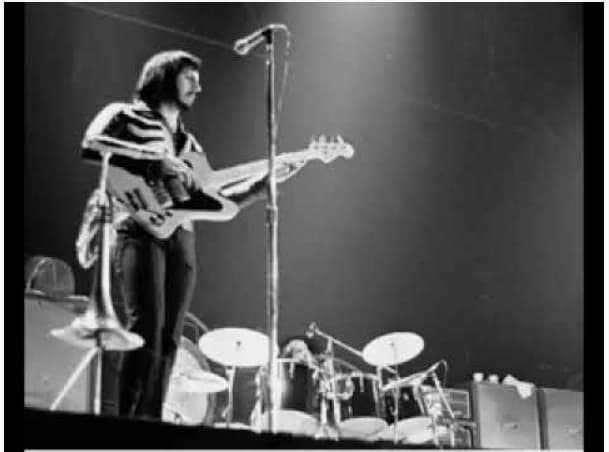
A circulating live clip of The Who performing Love Reign O’er Me at the Cow Palace in 1973 offers a striking window into one of rock music’s most intense eras. Despite its rough audio quality, the recording has drawn renewed attention for its emotional force and the band’s undeniable presence at the height of their creative powers.
The performance comes from a period when The Who were touring material from Quadrophenia, widely regarded as one of their most ambitious works. In this clip, Roger Daltrey delivers a commanding vocal, pushing the song’s dramatic arc with clarity and intensity. The rawness of the recording, rather than diminishing the experience, enhances it, bringing John Entwistle’s bass into sharp focus and giving the performance a visceral, almost immediate quality.
However, the night is also remembered for a serious onstage incident involving drummer Keith Moon. During the concert, Moon collapsed after reportedly ingesting a large quantity of tranquilizers mixed with alcohol. He briefly returned to the stage but soon passed out again, forcing the band to stop the show. In an unusual turn, a member of the audience was brought onstage to help complete the performance. The episode has since become one of the most cited examples of the unpredictability that often surrounded the band’s live appearances.
Guitarist Pete Townshend and the rest of the group pressed on under difficult circumstances, underscoring both their professionalism and the chaotic environment that defined much of rock performance culture in the early 1970s. The Cow Palace show stands as a reminder of the thin line between brilliance and instability that characterized many legendary acts of the time.
Beyond the incident, the clip captures The Who at a moment when they were widely considered among the most powerful live bands in the world. Their performances during the Quadrophenia era were known for their intensity, volume, and emotional depth, often leaving lasting impressions on audiences. Accounts from fans who saw them live in 1973 frequently describe overwhelming sound levels and a physical sense of the music’s impact.
Today, this footage continues to resonate not only because of the dramatic events surrounding it, but because it preserves a band operating at full creative force. Imperfect, unpredictable, and electrifying, the performance remains a compelling document of rock history at its most unfiltered.