
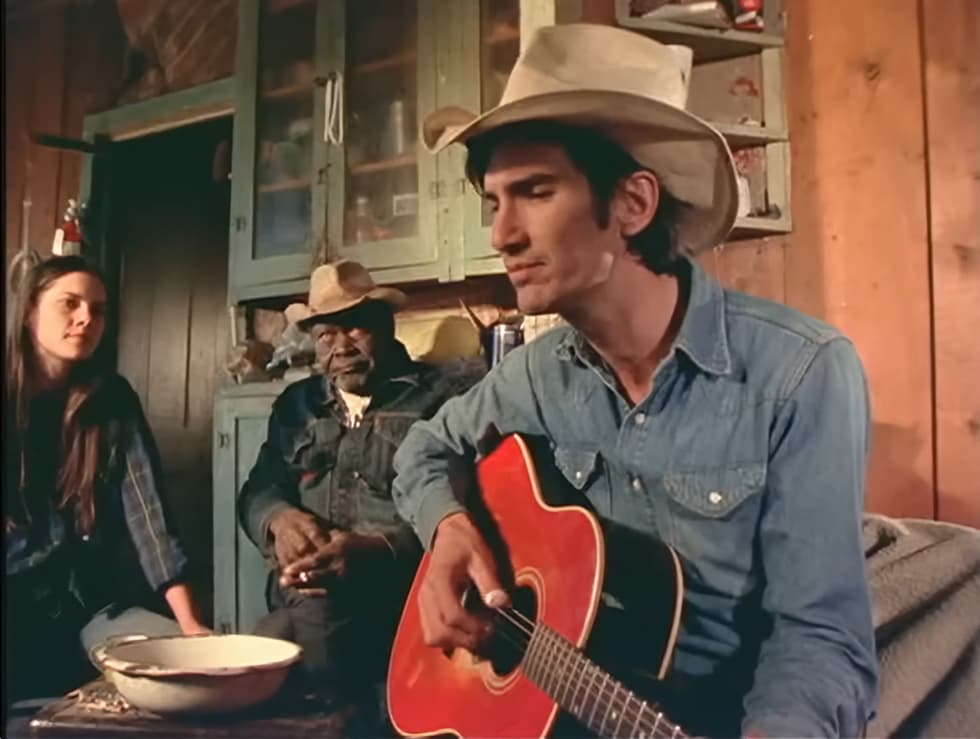
Townes Van Zandt live performance revisited from Uncle Seymour place
In a recently resurfaced clip from the documentary Heartworn Highways, singer songwriter Townes Van Zandt is seen performing a moving rendition of his well known song Pancho and Lefty during a gathering at Uncle Seymour place. The footage, originally included as DVD extras, captures a moment that fans often describe as one of the most honest reflections of country storytelling ever recorded.
The performance shows Van Zandt in a stripped down environment, away from the structure of studio production. The setting highlights the raw emotional weight of his songwriting, where every lyric carries the feeling of lived experience rather than polished performance. Viewers of the clip often note how the simplicity of the surroundings allows the song narrative to take full focus, reinforcing why his work continues to influence generations of folk and country musicians.
The source material from Heartworn Highways has long been praised by collectors and listeners who value traditional acoustic music. Supporters of the film often argue that it presents country music in its most authentic form, free from commercial shaping and modern industry production trends. The recording of Pancho and Lefty stands out within this context, not only for its musical quality but for the sense of intimacy it preserves.
Beyond the performance itself, personal memories from those who encountered Van Zandt later in his life add another layer of depth to his legacy. One account describes meeting him during a small venue show in South Carolina in 1996. At the time, he was visibly struggling and had to leave the stage early during his set. Later that night, however, he reportedly welcomed visitors near his travel trailer, offered them a drink, and even allowed one to play his guitar while he softly joined in singing Flyin Shoes. The story reflects both the difficulties he faced and the generosity he showed in private moments.
This rediscovered clip continues to circulate among music communities as a reminder of the fragile brilliance of Van Zandt and the enduring emotional power of his songs.