
The Melancholy Confession of a Rock Star Seeking Sanctuary from the Relentless, Garish Spotlight of Glam.
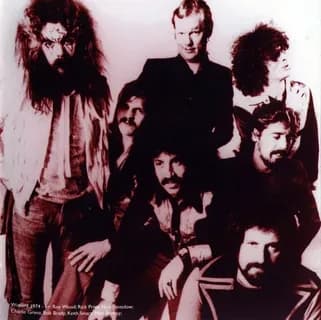
For those of us who lived and breathed the wild, sequined spectacle of 1970s Glam Rock, the name Wizzard evokes a vibrant kaleidoscope of noise, face paint, and sheer, joyful excess. Yet, beneath the tinsel and the chaotic brilliance orchestrated by the eccentric genius Roy Wood, there lay a profound artistic tension. This tension found its most poignant, bittersweet expression in the 1974 single, “Rock ‘N’ Roll Winter (Loony’s Tune).” Released on April 19, 1974, on the Warner Bros. label, the song marked a crucial turning point for the band, arriving after the unstoppable Christmas perennial and the initial flurry of chart-toppers. Despite the shifting tides of the music scene, this deeply personal ballad proved its enduring appeal, climbing to a respectable No. 6 on the UK Singles Chart, and even reaching No. 13 in Ireland.
The dramatic story behind this song is steeped in the weariness and drama that perpetually surrounded Roy Wood. A founding member of two of the era’s most innovative bands, The Move and Electric Light Orchestra (ELO), Wood possessed an almost frantic creative energy that often came at a personal cost. By early 1974, after a relentless schedule of recording, touring, and managing the sheer logistical madness of the multi-instrumentalist, flamboyant Wizzard ensemble, Wood was, quite simply, exhausted and unwell. The single itself, originally slated for an earlier release, was pushed back due to these health struggles and managerial turmoil, a delay that inadvertently made the song’s themes of hibernation and recovery feel all the more autobiographical.
The track, with its parenthetical subtitle (Loony’s Tune)—a nod to the madcap image Wizzard cultivated—stands as an emotional anomaly in their catalog. It trades the brassy, Phil Spector-esque wall of sound from earlier hits like “See My Baby Jive” for something far more tender and introspective. It is a slow, orchestral piano-ballad wrapped in a nostalgic blanket, but beneath that warmth lies a genuine plea for peace. The lyrics speak of a need to retreat: “Got to get away, from all the music and the fame,” and “But I can’t go out / All the world has gone insane.”
The true meaning of “Rock ‘N’ Roll Winter” is a star’s confession of vulnerability. It’s an artist admitting that the carnival—the endless tour, the demanding fans, the bright, scorching glare of the stage lights—has become unsustainable. The “winter” isn’t a meteorological season; it’s a profound, necessary emotional and creative retreat, a time to heal and recalibrate the soul. For those of us who cherished those dazzling, chaotic years of Glam, the song is a dramatic, reflective moment that pulls back the curtain on the cost of the spectacle. It reminds us that even the wildest rock-and-roll icon eventually craves the quiet comfort of home, away from the madness they created. This gentle, soaring melody is Roy Wood stripping away his glitter and make-up to offer a raw, human moment—a cherished flash of melancholy amidst the frenzy, confirming that even the loudest showmen need silence to survive. It remains a beautiful, deeply resonant piece of ’70s drama, a quiet crisis set to music.