
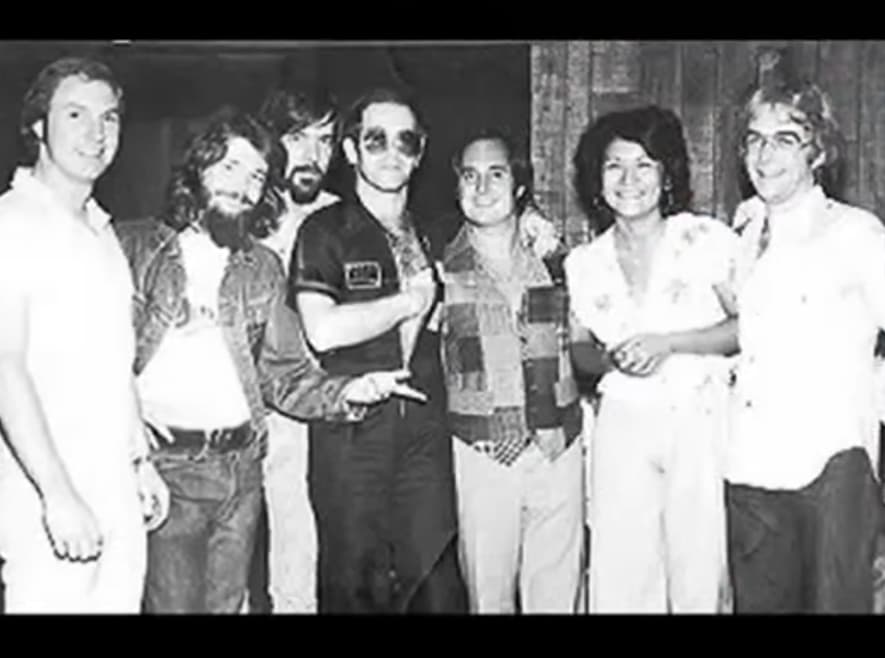
When Rivals Topped the Same Chart: The Story of “Bad Blood” in 1975
In 1975, Bad Blood became a defining pop moment for Neil Sedaka, marking a commercial peak that reaffirmed his remarkable mid decade resurgence. Released as a single from the album The Hungry Years, the song was written by Sedaka in collaboration with lyricist Phil Cody and issued on Rocket Records, the label founded by Elton John.
By October 1975, Bad Blood had climbed to number one on the Billboard Hot 100 in the United States. It remained at the top for three consecutive weeks, becoming the most successful single of Sedaka’s career in the American market. The achievement was particularly notable given Sedaka’s earlier chart dominance in the early 1960s, followed by a period of commercial decline. His partnership with Rocket Records in the mid 1970s introduced him to a new generation of listeners and restored his position within mainstream pop.
A key factor in the single’s impact was the high profile involvement of Elton John, who contributed prominent backing vocals. Although uncredited on the original U.S. single release, John’s distinctive voice is clearly audible in the chorus, adding urgency and texture to the production. In an unusual twist of chart history, Bad Blood was eventually displaced from the number one position by Elton John’s own single Island Girl, creating a rare handover between close collaborators occupying the same commercial summit.
The recording featured an accomplished group of session musicians. Neil Sedaka handled lead vocals and piano, while David Foster contributed keyboards. The guitar work was provided by Dean Parks and Steve Cropper. Nigel Olsson, long associated with Elton John’s band, played drums, and Leland Sklar performed on bass. Additional percussion came from Milt Holland. The horn and woodwind section included Chuck Findley, Slyde Hyde, Jackie Kelso, and Jim Horn. The arrangement balanced polished pop craftsmanship with a rhythmic drive characteristic of mid 1970s Los Angeles studio production.
Lyrically, Bad Blood channels themes of betrayal and fractured relationships, delivered with dramatic phrasing and an anthemic chorus. Its production style reflects the era’s emphasis on layered instrumentation and radio ready clarity, while still centering on Sedaka’s melodic sensibility.
The accompanying performance video, widely circulated online, captures the collaborative energy between Sedaka and John at a time when both artists were commercially dominant. More than four decades later, Bad Blood remains a landmark recording that illustrates the power of artistic alliance, strategic label support, and enduring songwriting craft in shaping pop history.
 Oldies Songs