
The Softest Goodbye Ever Written: The Story Behind “I Will Always Love You”
When Dolly Parton first performed I Will Always Love You, it wasn’t meant to be a timeless love anthem. It was something far more personal, a quiet, dignified farewell.
Written in a single night, the song marked Dolly Parton’s emotional departure from her longtime collaborator and mentor, Porter Wagoner. Rather than confrontation or conflict, she chose music as her language. In a moment that has since become legendary, Dolly reportedly sang the song directly to Wagoner before leaving. There were no arguments left, only acceptance.
This backstory transforms every live performance into something deeper than entertainment. The earliest renditions of the song carried a raw, almost unfiltered emotion. It was not just a performance; it was the first time she publicly relived her own goodbye. And in every performance that followed, the feeling never fully faded. Each note felt like reopening a memory that never quite closed.
Part of what makes the song so powerful is its striking contrast. Many listeners initially hear it as a beautiful declaration of love. But beneath its gentle melody lies a story of separation, growth, and emotional maturity. It is not about holding on, it is about letting go with grace. That duality gives the song its lasting resonance across generations.
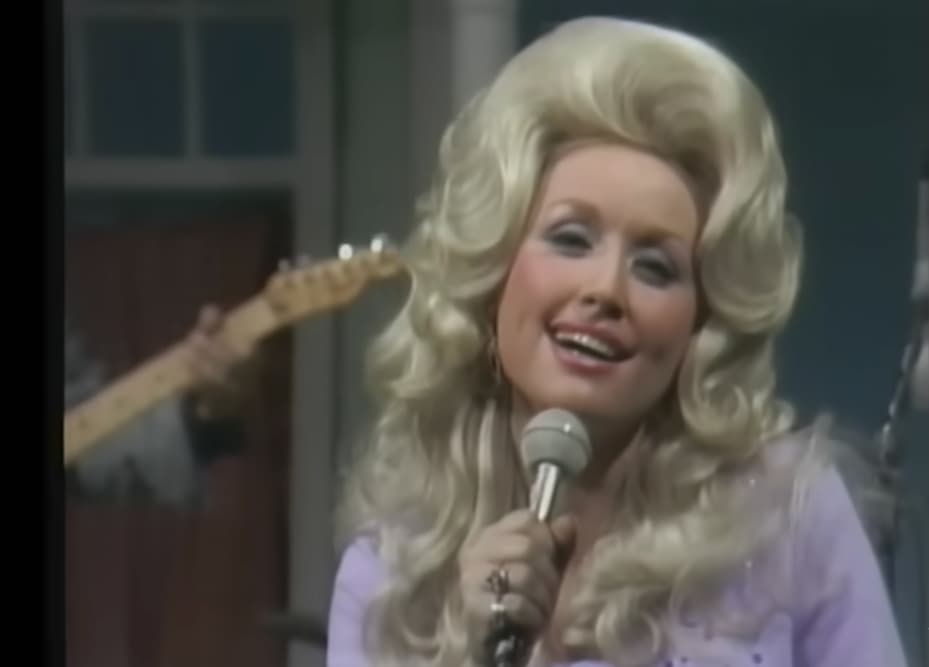
Unlike the dramatic vocal style later popularized by Whitney Houston, Dolly Parton’s live performances remain disarmingly simple. There is no grand production, no vocal acrobatics. Just a steady voice, a soft smile, and a sense of peace. That restraint is precisely what makes it so moving. It feels less like a show and more like a confession.
There is also a quiet nostalgia embedded in every performance. In an era before spectacle dominated the stage, artists like Dolly Parton and Elvis Presley relied on storytelling and sincerity. “I Will Always Love You” stands as a reminder of that time, when a song could carry an entire life within it.
What makes this piece truly remarkable is its emotional maturity. It is a rare kind of goodbye: one without bitterness, without blame. It acknowledges love, yet chooses departure. And perhaps that is why it continues to captivate audiences, because it reflects a truth many understand, but few can express.
In the end, every time Dolly Parton sings “I Will Always Love You,” she is not just revisiting a hit song. She is reliving a moment of her life, and inviting the audience to feel it with her.
Video:
 Oldies Songs