
“The Drums of War” and the Sound of History Repeating
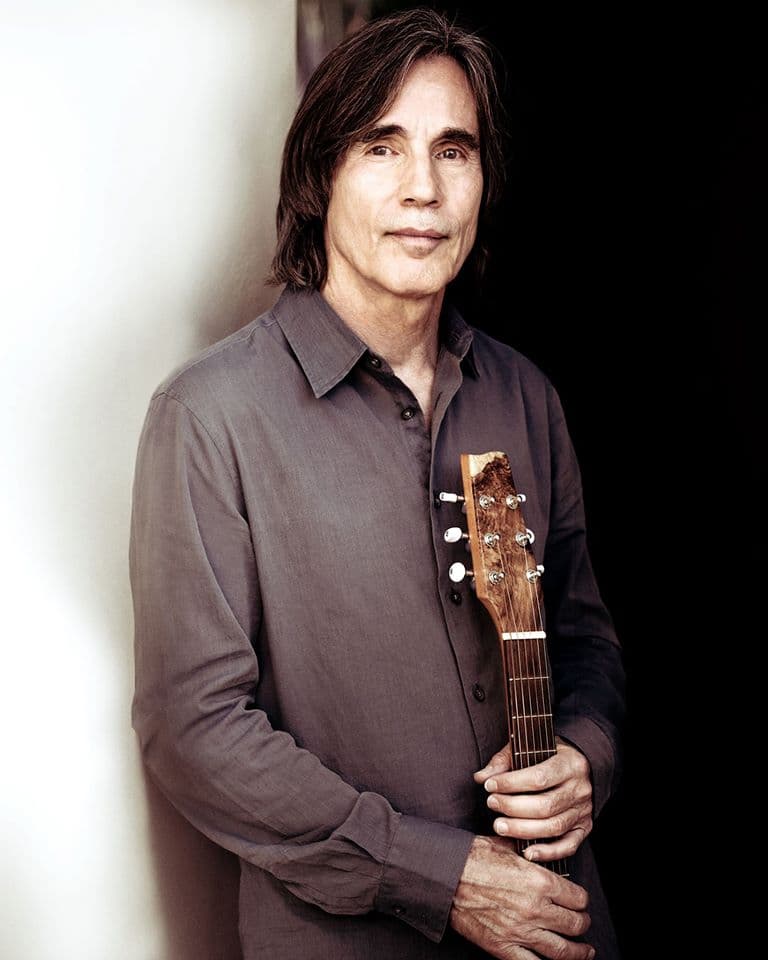
In an era shaped by uncertainty and prolonged conflict, Jackson Browne returned to one of his most enduring strengths. With “The Drums of War” from the album Time the Conqueror, he crafted a piece that does not seek attention through volume or spectacle. Instead, it builds its impact through restraint, precision, and a message that unfolds gradually.
From its opening moments, the song establishes a mood that is both calm and unsettling. The rhythm section introduces a measured pulse that remains consistent throughout, functioning almost as a metaphor for the inevitability of its theme. The instrumentation, shaped by collaborators including Jeff Young and Kevin McCormick, avoids excess. Piano, organ, and guitar lines are layered with care, creating a texture that supports rather than distracts from the central idea.
What defines the performance is Browne’s vocal approach. His delivery is controlled, almost conversational, yet carries an underlying tension that grows with each verse. Rather than presenting a direct confrontation, he allows the narrative to emerge through observation. This method invites the listener to engage more deeply, transforming the song into an experience that feels both personal and collective.
The historical context surrounding the composition adds further resonance. Written during a period marked by ongoing military conflicts, the song reflects a broader atmosphere of questioning and unease. Yet it avoids being confined to a single moment in time. Its themes extend beyond specific events, suggesting patterns that repeat across generations. In this sense, the music becomes a reflection on continuity, not only in sound but in human behavior.
The title itself provides a unifying image. The steady presence of rhythm throughout the piece mirrors the idea it conveys, reinforcing the connection between form and meaning. It is a subtle but effective technique, allowing the structure of the music to echo its message without overt emphasis.
Viewed today, “The Drums of War” stands as a reminder of the role music can play in addressing complex realities. It does not offer resolution or simple answers. Instead, it creates space for thought, encouraging listeners to consider the forces that shape the world around them. Through its clarity and restraint, the song continues to resonate as both a reflection and a quiet call to awareness.