
A Song That Knew Its Destiny The Night It Was Born
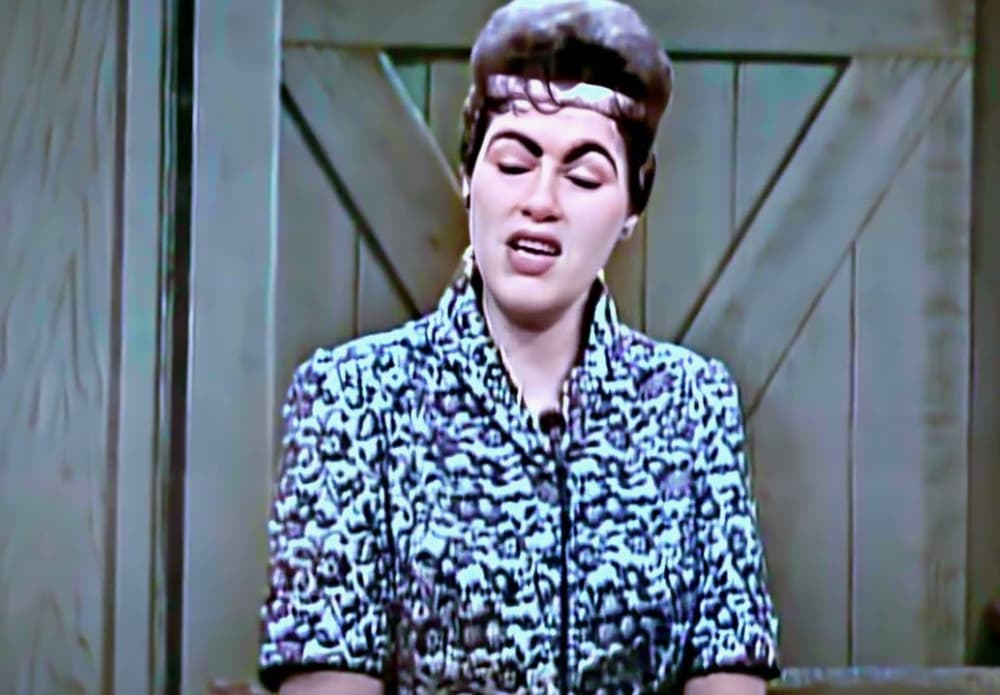
A newly restored broadcast of She’s Got You brings audiences back to February 7, 1962, when Patsy Cline stepped before the cameras at the Grand Ole Opry television stage in Nashville. The performance, now remastered in color and paired with the original studio audio, captures a rare moment when a song was not yet a classic but already carried the certainty of becoming one.
Written by Hank Cochran, the song entered Cline’s life with unusual immediacy. According to accounts from the time, Cochran called her directly with the confidence that he had just written her next number one hit. Cline invited him over that same day, where he performed it on guitar in front of her and fellow singer Dottie West. What followed was almost instinctive. She was so moved that she learned the song that very night and phoned her manager and producer to sing it to them, an uncommon gesture that spoke to her certainty.
This instinct proved correct. Released at the end of January 1962, the single quickly rose to the top of the country charts while also crossing into the pop and easy listening audiences. It marked a turning point not only in Cline’s career but in the broader reach of the Nashville sound, supported by elite session musicians and vocalists whose subtle contributions shaped its emotional clarity.
The televised performance itself stands out for its restraint. Cline does not dramatize the lyrics. Instead, she delivers them with a quiet steadiness that makes the story feel lived rather than performed. The song tells of a woman left holding onto objects and memories while the man she loves belongs to someone else. In Cline’s interpretation, this is not a moment of confrontation but of realization. The absence of theatricality becomes the performance’s greatest strength, drawing the viewer closer rather than pushing emotion outward.
What makes this footage particularly compelling today is its timing. Broadcast just days after the song’s release, it captures Cline in the midst of a rising success rather than in reflection of it. There is a sense of presence, as if the audience is witnessing the exact point where a private emotion becomes a shared cultural memory.
More than six decades later, the performance endures not simply because of its historical value, but because it reveals how quickly a song can find its voice when placed in the hands of the right artist. In this moment, Patsy Cline was not interpreting a hit. She was becoming inseparable from it.