
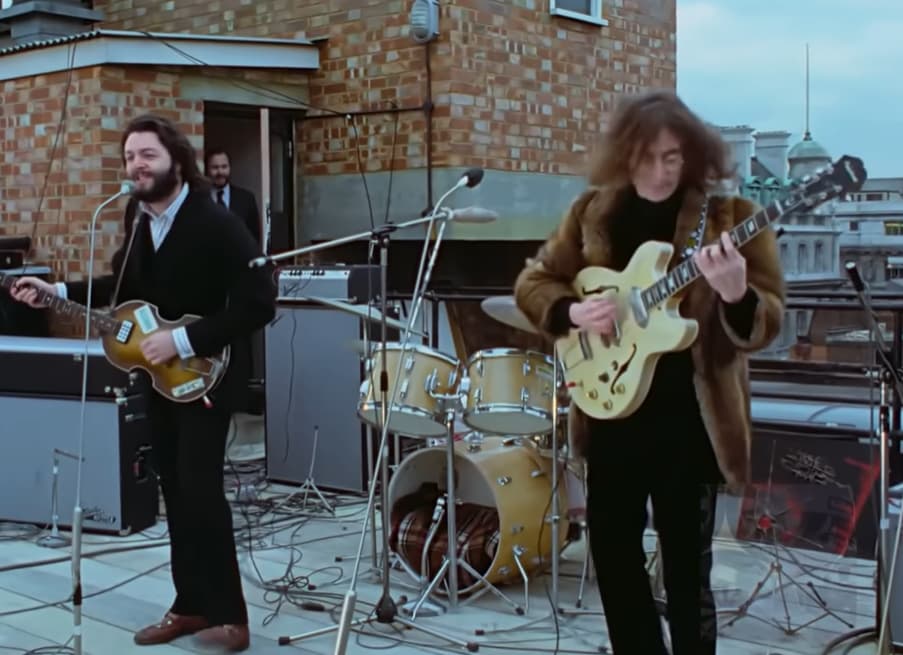
Above the City, Beyond the End: The Beatles Turn a Rooftop into Rock History
On a cold January day in 1969, the skyline of London became the stage for one of the most unexpected and enduring moments in popular music. The Beatles climbed to the rooftop of Apple Corps headquarters and delivered a performance that would quietly mark the end of an era. Opening with Get Back, they offered not just a song, but a statement that still resonates decades later.
What makes this performance remarkable is its sense of immediacy. There was no grand announcement, no formal audience, and no traditional stage. Instead, the band played into the open air, their music spilling into the streets below. Office workers leaned out of windows, pedestrians gathered in confusion and delight, and an ordinary workday was transformed into a spontaneous cultural event. The setting itself became part of the performance, turning the city into an unplanned participant.
Behind this seemingly effortless moment lay a period of internal tension. The group was navigating creative differences and personal strains that had begun to pull them apart. Yet, in this fleeting window, those divisions seemed to dissolve. The presence of keyboardist Billy Preston added warmth and cohesion, helping to anchor the sound as the band rediscovered the joy of playing together. It is this contrast between backstage uncertainty and onstage unity that gives the performance its emotional depth.
Choosing “Get Back” as the opening number carried its own quiet symbolism. The song’s call to return to roots mirrored the band’s attempt to reconnect with a simpler, more direct form of rock music. After years of increasingly complex studio work, this rooftop session stripped everything back to its essentials. Guitar, voice, rhythm, and the unpredictable energy of a live environment. It was both a return and a farewell, though the finality of the moment would only be understood in hindsight.
As the performance unfolded, its climax was shaped not by musical excess but by circumstance. Authorities, responding to noise complaints, moved to shut it down. The interruption added an unscripted layer of tension and authenticity. When the final notes faded, the moment closed with a touch of humor, leaving behind a sense of completion that no planned finale could have achieved.
Today, the rooftop concert is remembered not simply as the last live appearance of The Beatles, but as a powerful reminder of what made them extraordinary. In a setting as ordinary as a city rooftop, they created something timeless. It was a performance that captured spontaneity, resilience, and the enduring connection between artists and the world around them.
 Oldies Songs