
The Night a Voice Broke the Silence and Changed Country Music Forever
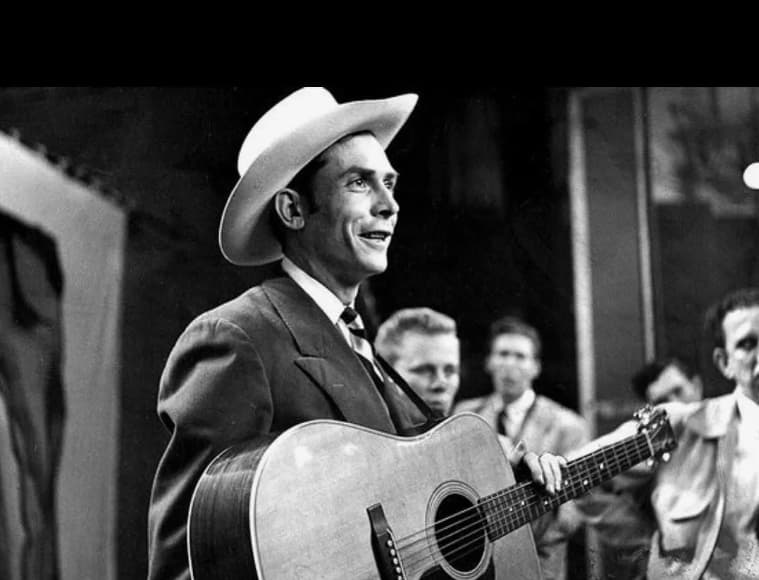
In 1949, on the revered stage of the Grand Ole Opry, a relatively unknown performer stepped forward and delivered a moment that would ripple through the history of American music. Hank Williams did not arrive as a legend. He arrived as a man with a song. By the time he left the stage, he was something else entirely.
The performance of Lovesick Blues that night was not polished in the conventional sense. It carried a trembling edge, a fragile intensity that felt almost too personal for a public stage. Yet it was precisely this rawness that held the audience captive. Witnesses would later recall how the atmosphere shifted from casual anticipation to stunned silence, followed by an overwhelming demand for more. He was called back repeatedly, an extraordinary response that signaled something rare had just occurred.
What makes this moment even more compelling is the nature of the song itself. Lovesick Blues was not originally his creation, yet in that performance, it became inseparable from his identity. Williams did not reinterpret the song so much as inhabit it. Every note suggested lived experience, blurring the line between performer and narrative. The emotional weight he carried into the performance gave the song a new life, one that resonated far beyond its earlier versions.
Behind the scenes, expectations for Williams had been modest. He was known in regional circles and had gained traction through radio appearances, but nothing suggested the magnitude of what was about to unfold. This contrast between perception and reality adds another layer to the story. It was not just a successful debut. It was a transformation witnessed in real time.
There is also a haunting perspective that deepens the significance of this performance. In retrospect, it stands as the beginning of a meteoric rise that would be matched by an equally rapid decline. Williams’s career, though brilliant, was brief and marked by personal struggles that would eventually overshadow his success. Seen through this lens, the 1949 performance becomes more than a breakthrough. It becomes a fleeting moment where talent, timing, and vulnerability aligned perfectly.
Today, the recording remains more than a historical artifact. It is an invitation to experience a turning point as it happened. Not refined, not distant, but immediate and human. For listeners, it offers something increasingly rare in modern music. A reminder that sometimes, a single voice in a single moment can alter everything.