
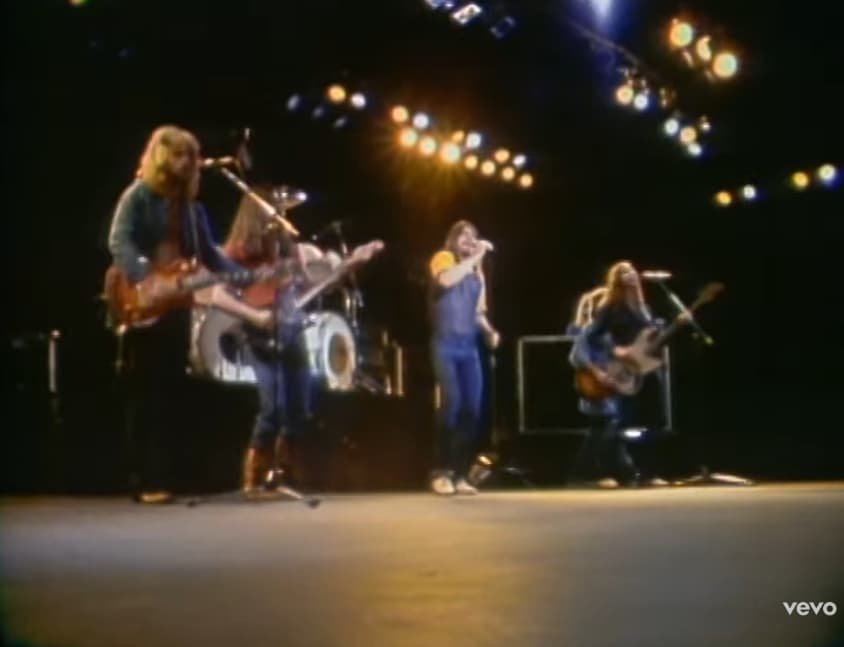
A Voice Forged in Grit: Revisiting “Edge of Sundown” and the Enduring Power of Danny Joe Brown
A renewed wave of interest in “Edge of Sundown” by Danny Joe Brown Band has brought attention back to one of the most distinctive voices in Southern rock. Fronted by Danny Joe Brown, best known for his work with Molly Hatchet, the track stands as a defining piece from his solo period, offering insight into both his musical identity and personal resilience.
Recorded during a time when Brown briefly stepped away from Molly Hatchet, “Edge of Sundown” reflects continuity rather than departure. The song retains the hallmarks of Southern rock, including driving rhythms and layered guitar textures, while placing greater emphasis on Brown’s vocal delivery. His voice, often described by listeners as rough and whiskey soaked in tone, becomes the central instrument. It carries a weight that is less about technical precision and more about lived experience.
Accounts from those who encountered Brown off stage frequently echo the same observation. His speaking voice closely mirrored his singing voice, reinforcing the authenticity that defined his performances. This characteristic contributed to a sense that there was little separation between the man and the music, a quality that continues to resonate with audiences revisiting his work today.
The context of his career adds further depth to the song’s legacy. Brown’s tenure with Molly Hatchet was marked by both success and interruption. Health challenges, particularly his struggle with diabetes at a time when treatment options were more limited, influenced his ability to maintain a consistent touring schedule. Despite these obstacles, he remained active within the demanding environment of 1970s rock culture, continuing to perform with intensity and commitment.
“Edge of Sundown” is often cited by fans as the standout track from his solo efforts. Its enduring appeal lies not in innovation but in execution. The song captures a familiar Southern rock sound delivered with conviction, anchored by a vocal presence that few could replicate. For many listeners, it represents the clearest expression of Brown’s individual artistry outside the framework of his primary band.
Following his passing in 2005, discussions around Brown’s legacy have only intensified. He is frequently positioned among the most recognizable voices in Southern rock, not because of mainstream crossover success, but due to the unmistakable character of his performances. The continued circulation of “Edge of Sundown” underscores that reputation.
As archival recordings and fan discussions bring renewed visibility to his work, the song serves as a reminder of a period when voice, identity, and regional sound were closely intertwined. In revisiting it, listeners are not only engaging with a track but with the lasting imprint of an artist whose presence remains difficult to replace.