
A Late Career Performance That Reframes a Classic Song
From Pop Hitmaker to Storyteller on Stage
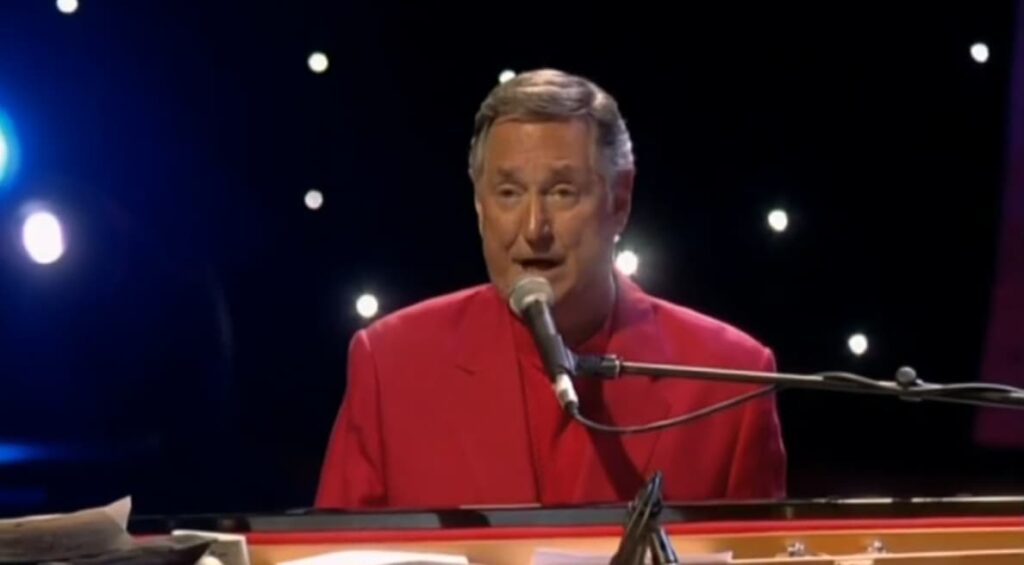
A live performance of “Cardboard California” by Neil Sedaka at Royal Albert Hall continues to attract attention among music audiences for its restrained style and emotional clarity. The clip, drawn from the concert film The Show Goes On Live at the Royal Albert Hall, presents a moment that contrasts with Sedaka’s earlier reputation as a polished pop performer.
Originally released on the album Sedaka’s Back, “Cardboard California” has long been regarded by listeners as one of the artist’s more reflective compositions. The song offers a subtle critique of illusion and image making often associated with the entertainment industry, presenting a perspective that differs from the upbeat tone of Sedaka’s most widely known hits.
In this live setting, Sedaka performs the piece with minimal accompaniment, relying primarily on piano and vocal delivery. This stripped down arrangement allows the structure and lyrical content to take center stage. Audience reactions captured in comments and discussions frequently highlight the performance’s quiet intensity, noting how the absence of elaborate production draws attention to phrasing, timing, and emotional nuance.
Some listeners have also pointed to the song’s musical construction as a distinguishing feature. References to unusual rhythmic patterns, including passages that resemble a 5 by 8 time signature, have led a number of viewers to describe the piece as unexpectedly complex. While Sedaka is not typically associated with progressive rock, such observations reflect how this performance challenges assumptions about his musical range.
The historical distance between the song’s original release in the mid nineteen seventies and this later stage interpretation adds another layer of meaning. More than three decades after its debut, “Cardboard California” is presented not as a nostalgic revisit but as a work that retains relevance through reinterpretation. Sedaka’s delivery suggests continuity rather than reinvention, maintaining the core sentiment while allowing maturity and experience to shape expression.
Ultimately, the Royal Albert Hall performance demonstrates how an established artist can revisit earlier material with renewed focus. It underscores the enduring value of composition and performance craft, offering a reminder that even within a catalog known for mainstream success, there are moments of introspection that continue to resonate with audiences across generations.